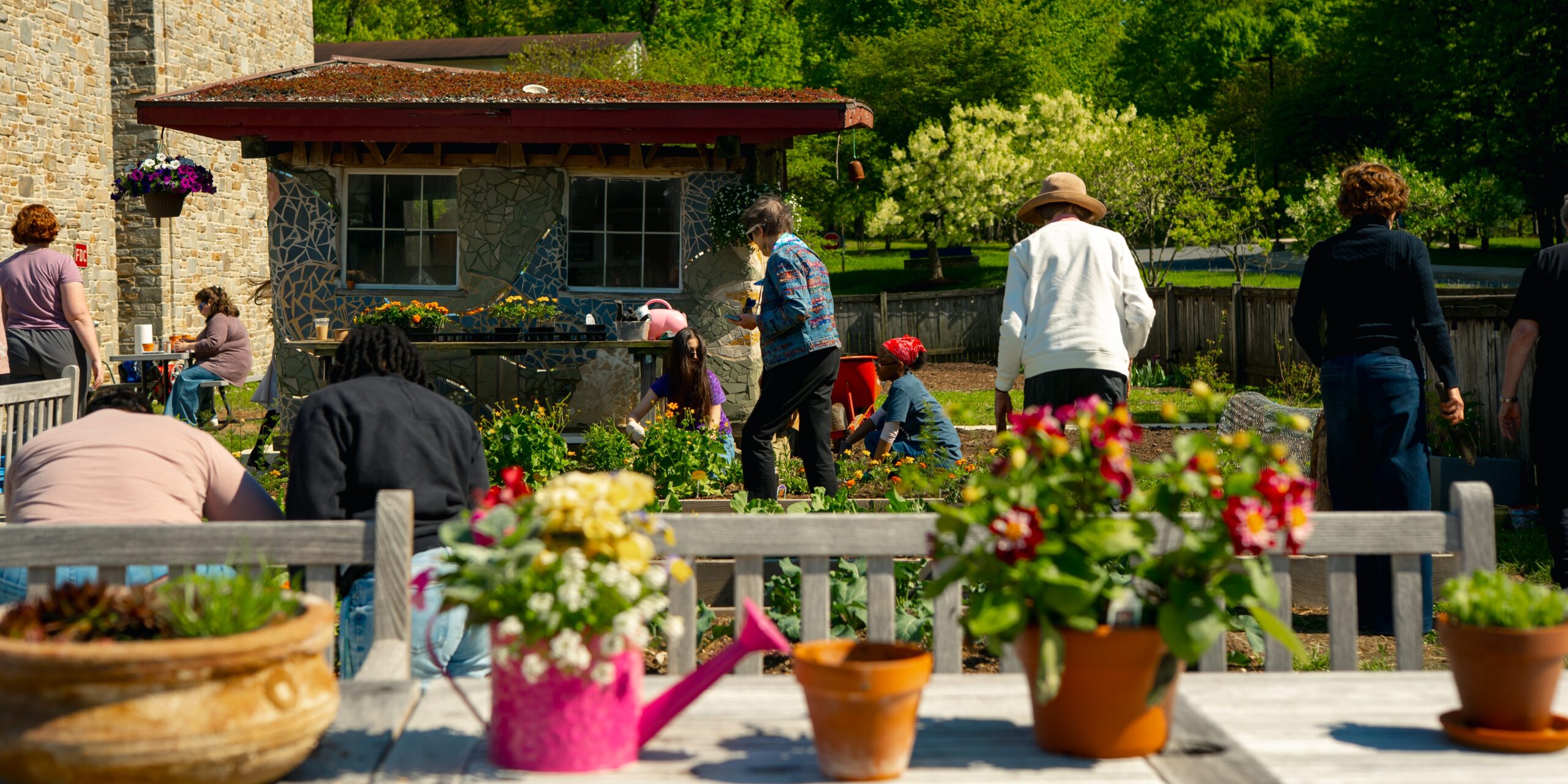
The greenery and leafy surroundings of Goucher’s campus have always been a draw for students. Adding to the charm is Goucher’s Community Garden, a student-led initiative from the Office of Community-Based Learning, where students can grow flowers, produce, and herbs. This year, the garden beds have been opened to residents of Edenwald Senior Living, as part of the college’s university retirement community partnership. Volunteers for the garden take part in seasonal planting, communal watering, maintenance, and harvest-sharing. According to the mission statement, “the garden welcomes and encourages community involvement,” and has been created “using universal design principles to ensure accessibility for people of all ages and abilities.”
That ethos is one that Goucher alums carry beyond the campus, so it’s no wonder that many of them work and volunteer in botanical gardens, conservatories, local parks, and national parks. Below, meet four alums who have done just that.
Molly Hoopes ’84
Cylburn Arboretum and Rawlings Conservatory
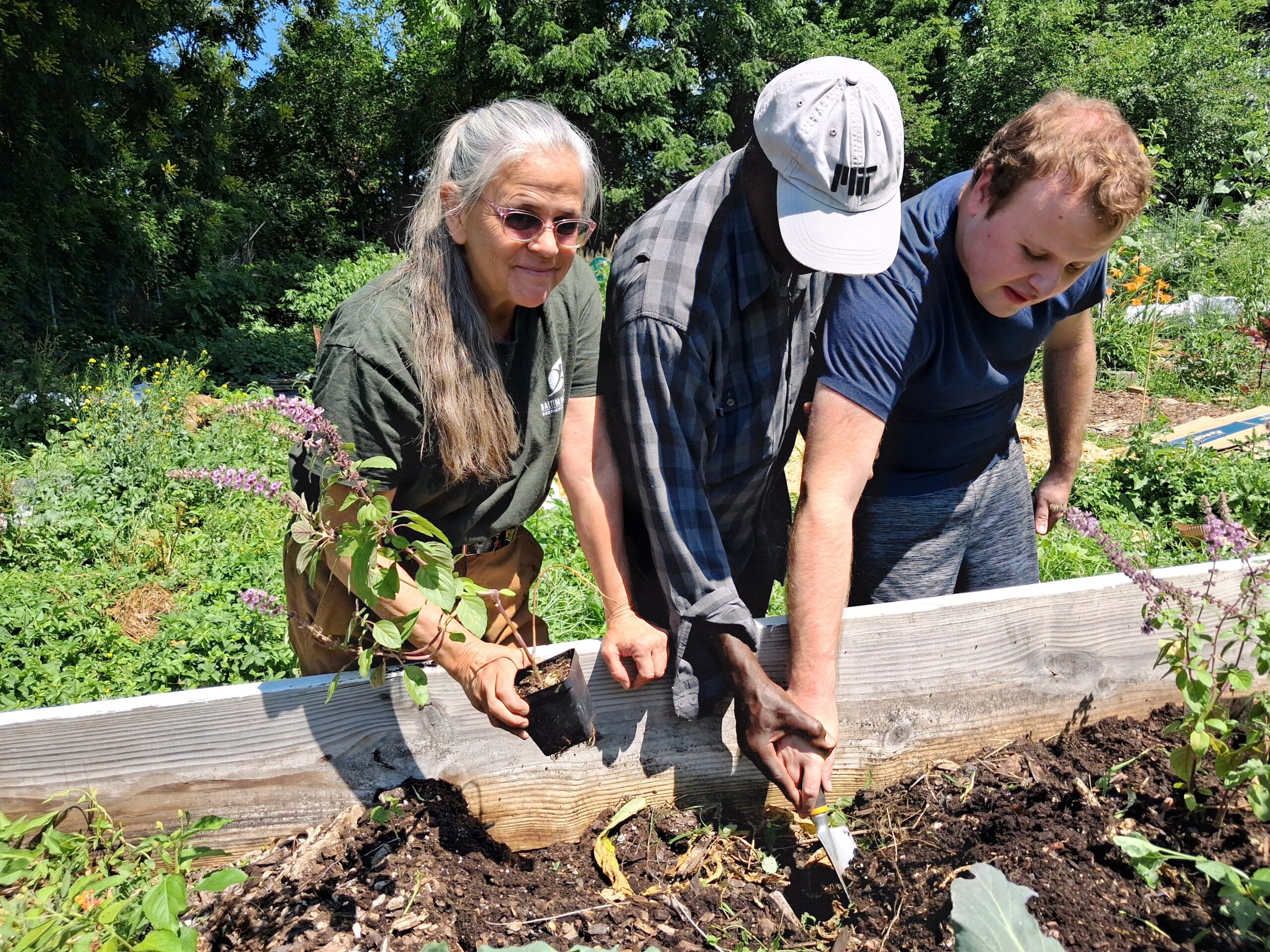
Molly Hoopes is a naturalist at Cylburn Arboretum and the H.P. Rawlings Conservatory & Botanic Gardens, both run by Baltimore City Recreation & Parks. She also teaches visitors a great deal of history about both places. Cylburn is the city’s largest public garden, with 200 acres of woods and trails, planted trees and gardens, a nature center, and the Cylburn Mansion, built in 1888 as a summer home by Jesse Tyson, the first person to mine chromite in the United States. “Throughout the 1800s, all the chromite in the whole world came from Baltimore City,” says Hoopes, whose office is in one of the mansion’s former bedrooms.
Cylburn also has six greenhouses that grow plants for the Rawlings Conservatory, a few miles away in Druid Hill Park. Rawlings Conservatory opened in 1888. It’s the second oldest iron-and-glass public conservatory still in use in the U.S., and it has five rooms with different biomes—the Desert House, Mediterranean House, Tropical House, Palm House, and Orchid Room—as well as more than an acre of outdoor gardens. “There’s always something blooming there,” Hoopes says.
Hoopes, who is also a painter, does a lot of programming for Cylburn Arboretum and Rawlings Conservatory. At Cylburn, she runs a therapeutic gardening program, an after-school club and a summer program with hiking and arts and crafts, and a homeschool program. She also gives mansion tours, lectures, and nature hikes, maintains the ADA-accessible Buckeye Trail, and takes part in festivals and market days. At Rawlings, she runs a homeschool program and tours for groups like schools, seniors, and garden clubs. This year, she organized an art show at Rawlings, something she also does every year at Cylburn.
For how busy Hoopes is, it helps that she enjoys her work so much. “I like being outside,” she says. “I like looking at plants all day long, breathing in the plants. It puts me in a good mood all the time.”
Teaching the teacher: Hoopes has a master of arts in teaching from Johns Hopkins and a teaching certificate in biology, and she has taken classes in science illustration and botanical art.
Tips for visiting: “The best time to see flowers in the gardens at Cylburn is September and October.”
Favorite part of Cylburn: “The Ravine Trail is my favorite place because it’s quiet.”
Favorite part of Rawlings: “I like the Desert House. There are so many weird plants.” In 2013, a blue agave, known as a century plant, bloomed and grew to 30 feet. “We had to open up the ceiling, and it flowered on top.” They also have a carrion plant, “a desert cactus that smells really horrible when it’s blooming, but it’s really beautiful.”
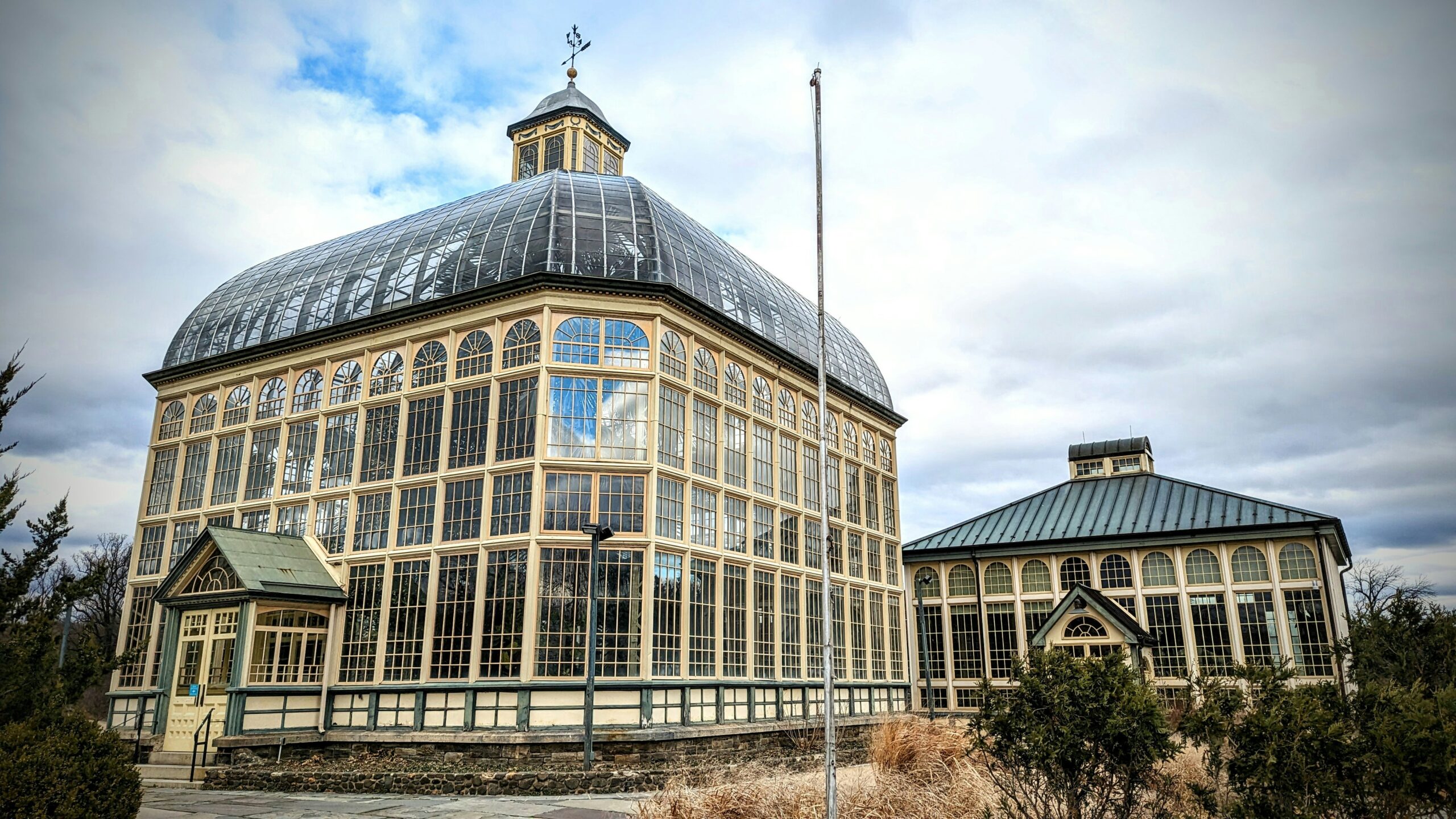
Rawlings Conservatory, photo by Michael Richardson on Unsplash
Dylan Dubay ’22
Coastal Maine Botanical Gardens
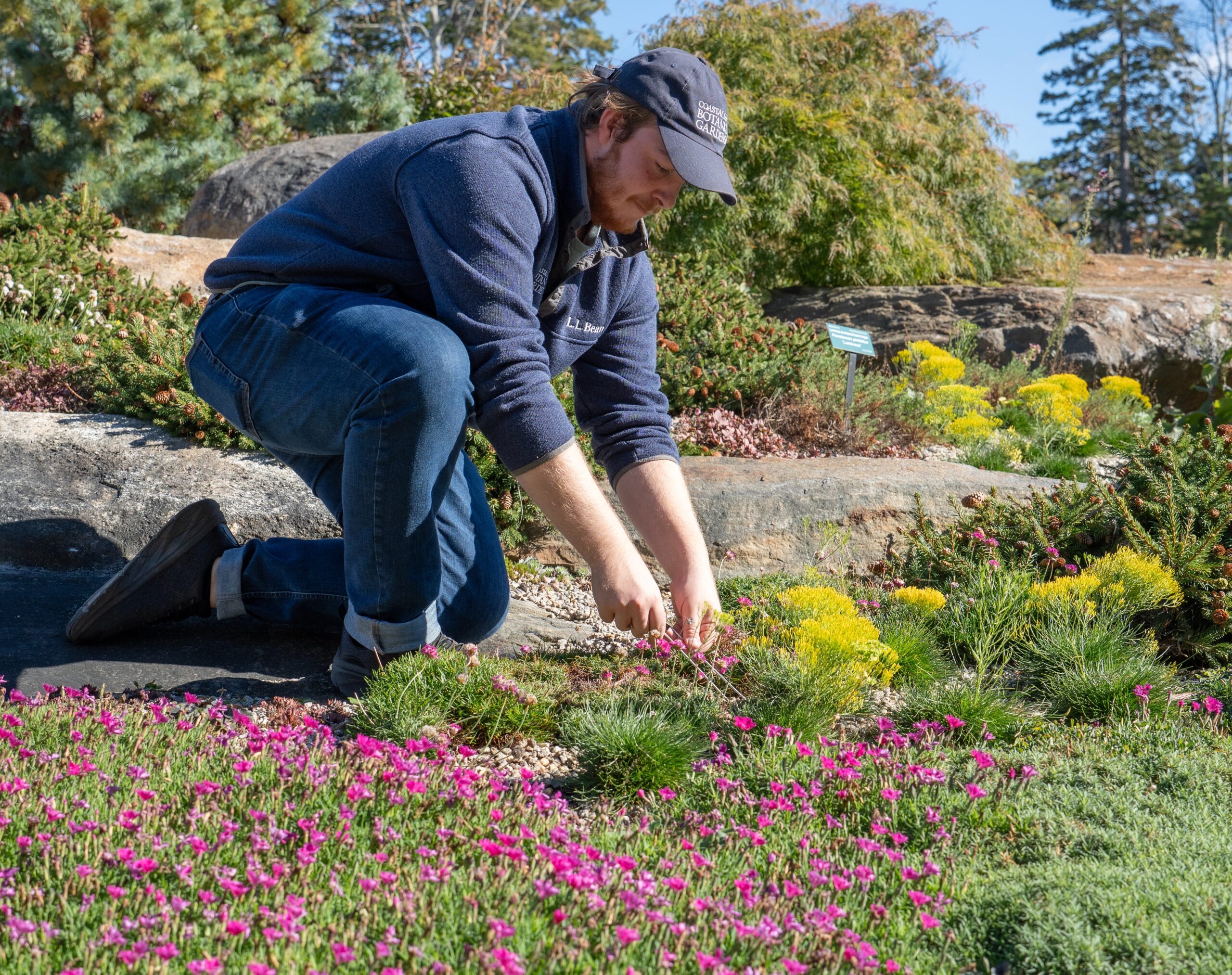
Dylan Dubay is the science and collections information specialist at the Coastal Maine Botanical Gardens, which means he oversees all the data management for the living collections and for some of their research projects. “I like to describe myself as a librarian for plants,” he says. Dubay is also a traditional librarian, curating the books for the garden’s library. And he manages the herbarium collection, which includes close to 10,000 specimens of pressed and preserved plants. The collection supports an active project to document all the plants across Maine’s three eco-regions.
Located in Boothbay, ME, Coastal Maine Botanical Gardens has more than 300 acres of greenery, with 53 acres of cultivated space. It backs up to the Back River and has trails, gardens, ponds, and a native butterfly house. For the living collections, Dubay tracks the plants throughout their lives. Any time a plant arrives at the gardens, whether as a seed or a mature plant, Dubay creates a record for it in their database. “I also photograph and map all these plants,” he says. They’re posted publicly on the website’s Garden Explorer, “which is a really wonderful interactive map tool for people to learn about our collections.”
There is valuable data being collected from the native seeds they propagate, like what time of year the seeds are sowed and which methods are used. “It’s important data for the larger scientific community,” he says, particularly for unusual native species. One long-term project is focused on preserving New England’s native milkweeds, and they have a few in propagation right now. Dubay’s favorite is called clasping milkweed, “or Asclepias amplexicaulis. All the leaves clasp to the stem of the milkweed.” He says it’s germinating quite successfully this year. “I’m excited for that one.”
What else Dubay is up to: “I produce lots of things for staff, like maps and inventories. I also get to use the engraver to make all our plant labels.”
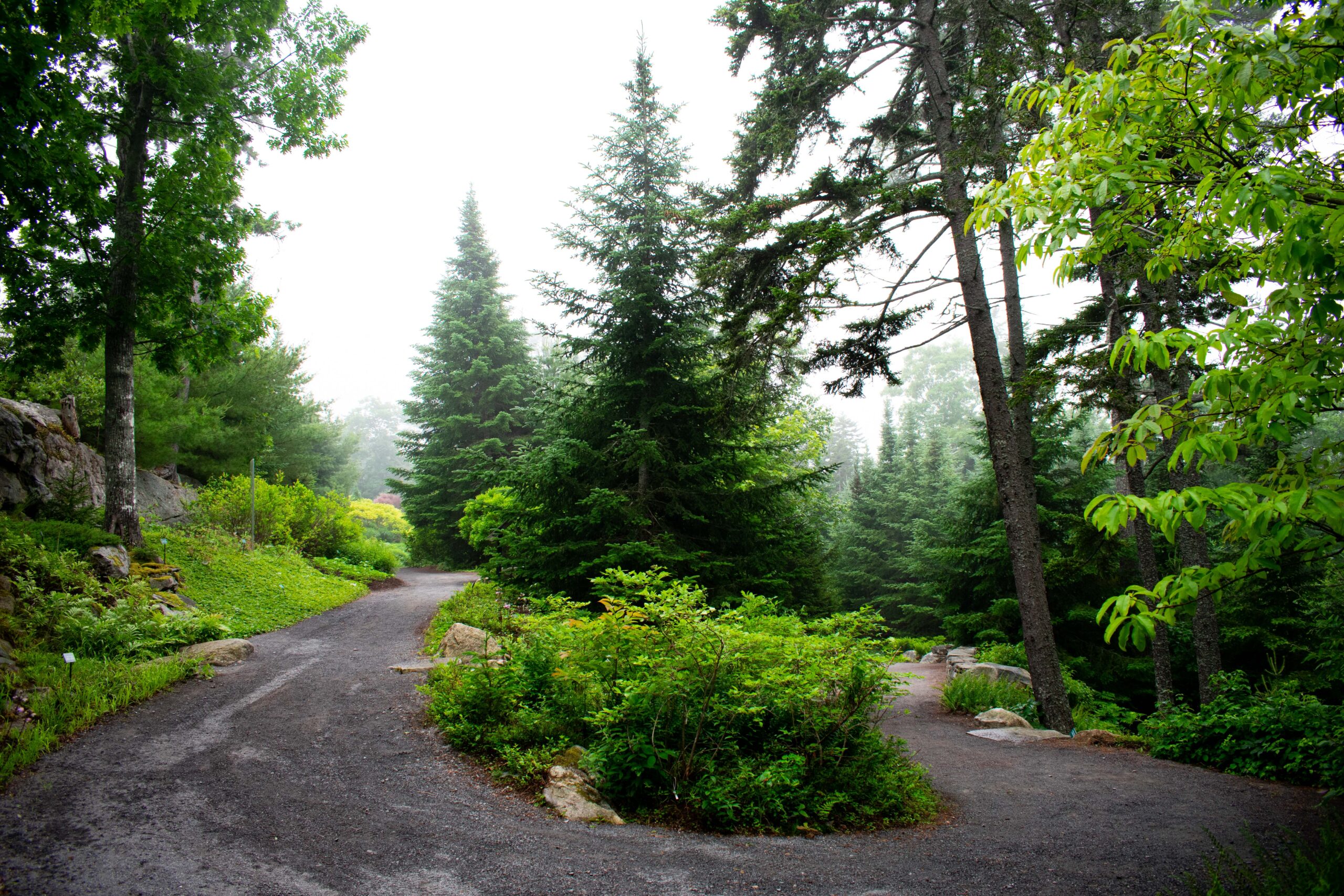
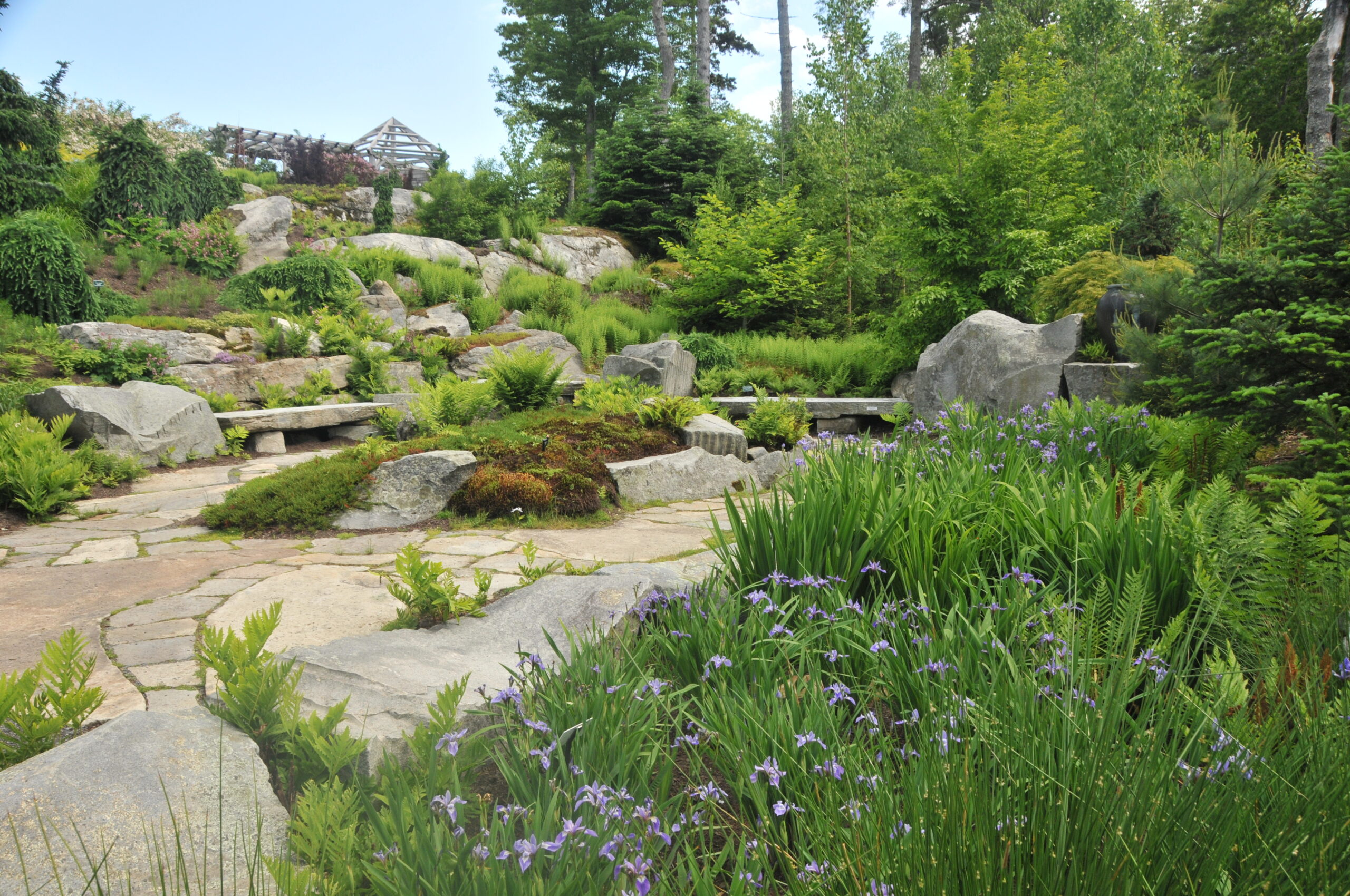
Favorite part of the garden: “I’m a plant nerd, so it’s hard to choose. The Haney Hillside Garden takes you on this wonderful loop path full of conifer trees that meanders down this hillside toward the Back River. That’s my favorite place to be.”
How he got here: Dubay came to Goucher to study political science before switching to biology. “When I got to Goucher and started learning about the trees and plants on campus, it pushed me to think about what I wanted to do with my life. I credit Goucher for inspiring me to learn about the natural world around me and pursue that in my education.”
Pat Sekler ’55
Riverbend Park
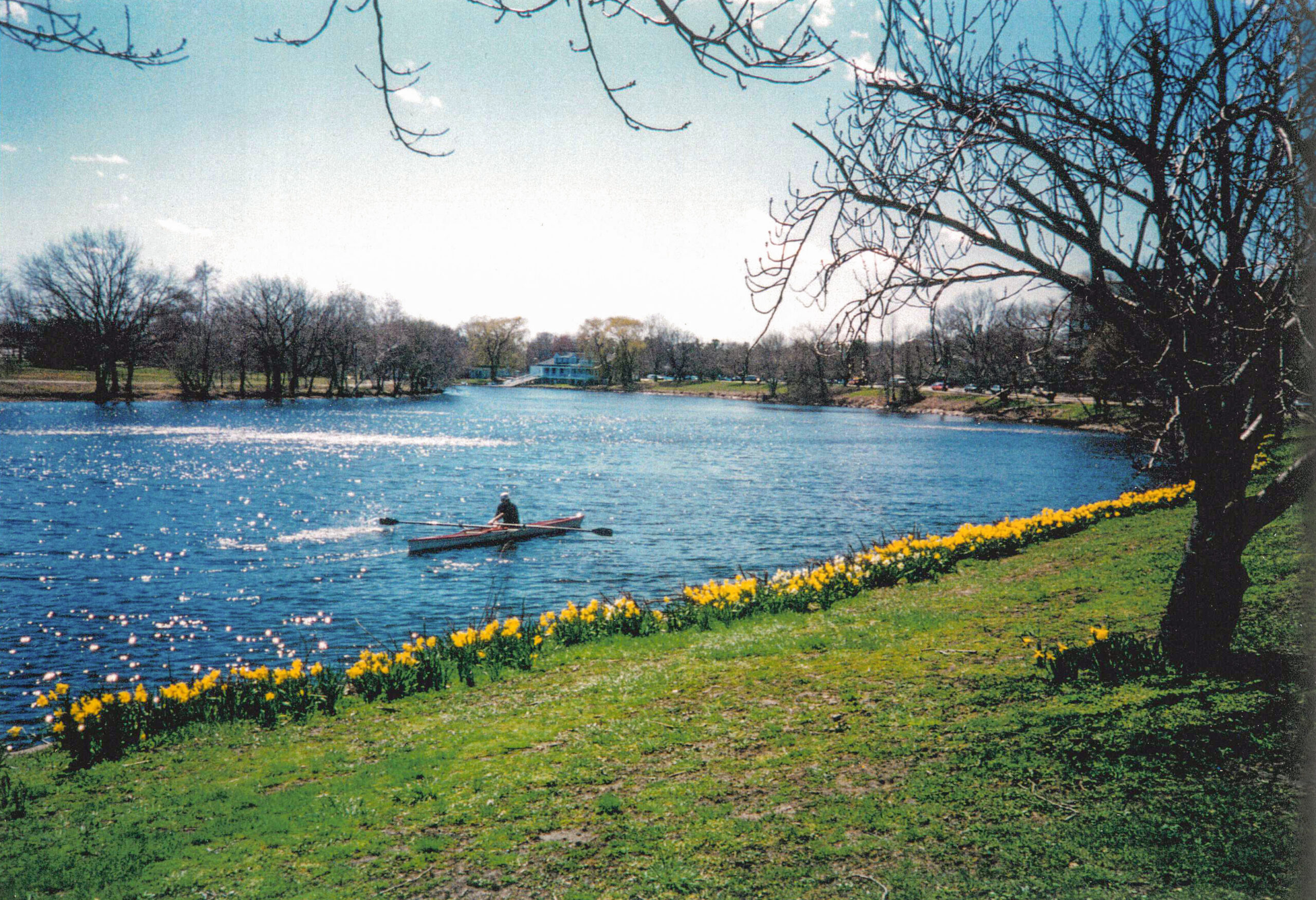
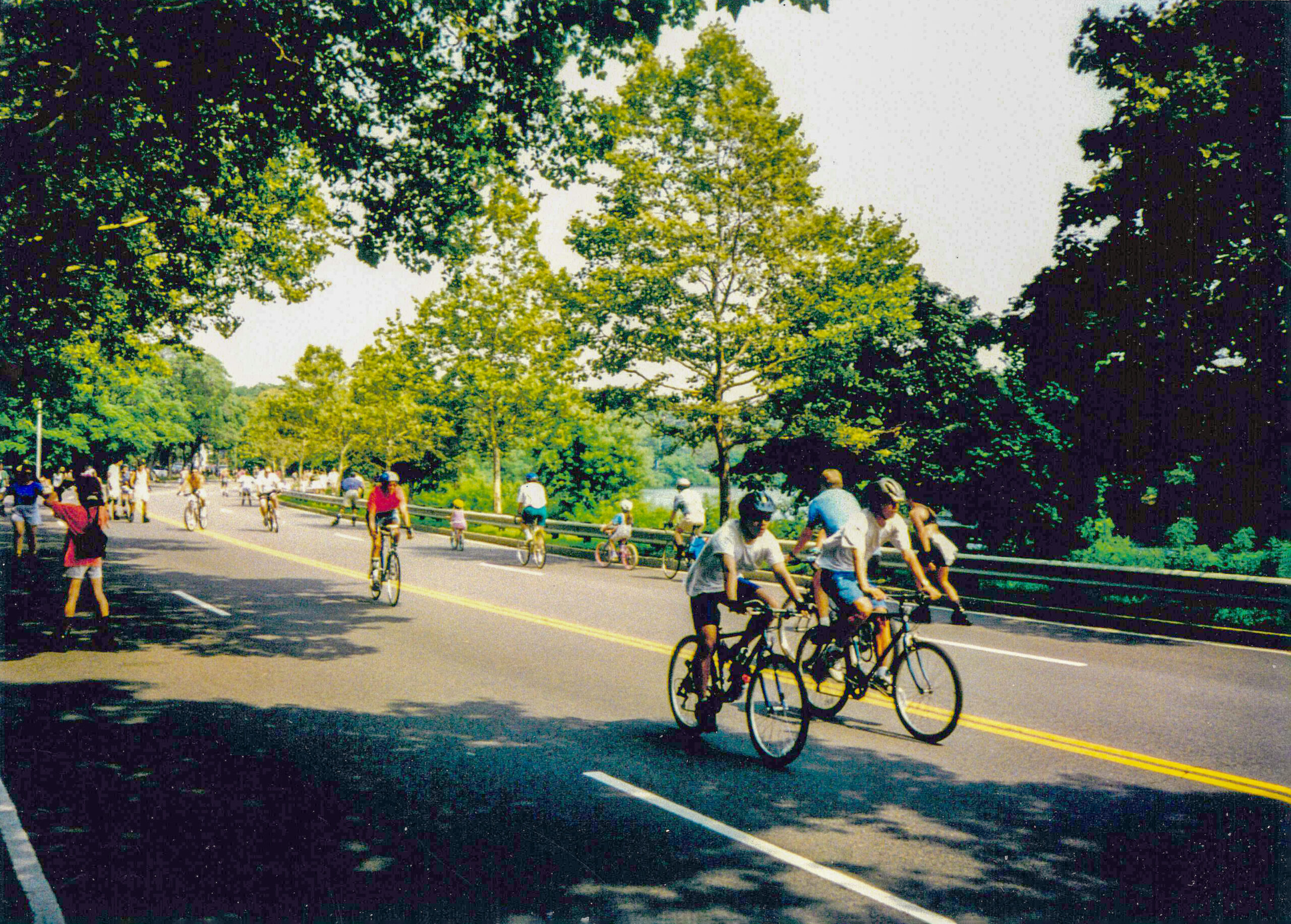
Riverbend Park is a green space along a section of the Charles River in Cambridge, MA, and, with the help of two other trustees, Pat Sekler runs the People for Riverbend Park Trust, which has advocated for the park for 50 years. It’s all thanks to the vision of Isabella Halstead. “When she got home from work, all she wanted to do was to walk down to the Charles River, which was just about 300 feet from where she lived,” says Sekler. But there was no way to cross Memorial Drive, a busy, four-lane parkway. In 1974, Halstead had an idea: What if Memorial Drive could be occasionally closed to traffic? In 1975, she founded the trust to bring it about, and in 1976, she succeeded in getting almost two miles of the drive closed every Sunday.
Within a few years, Sekler, who also lived along the river, joined the trust. For the first 10 years, the trust raised money for portable toilets and a police detail. “In 1985, the state took over the Sunday Park and made it an official state-run activity,” Sekler says. Over the years, it has given people much needed “free space in a green area right along the historic river.”
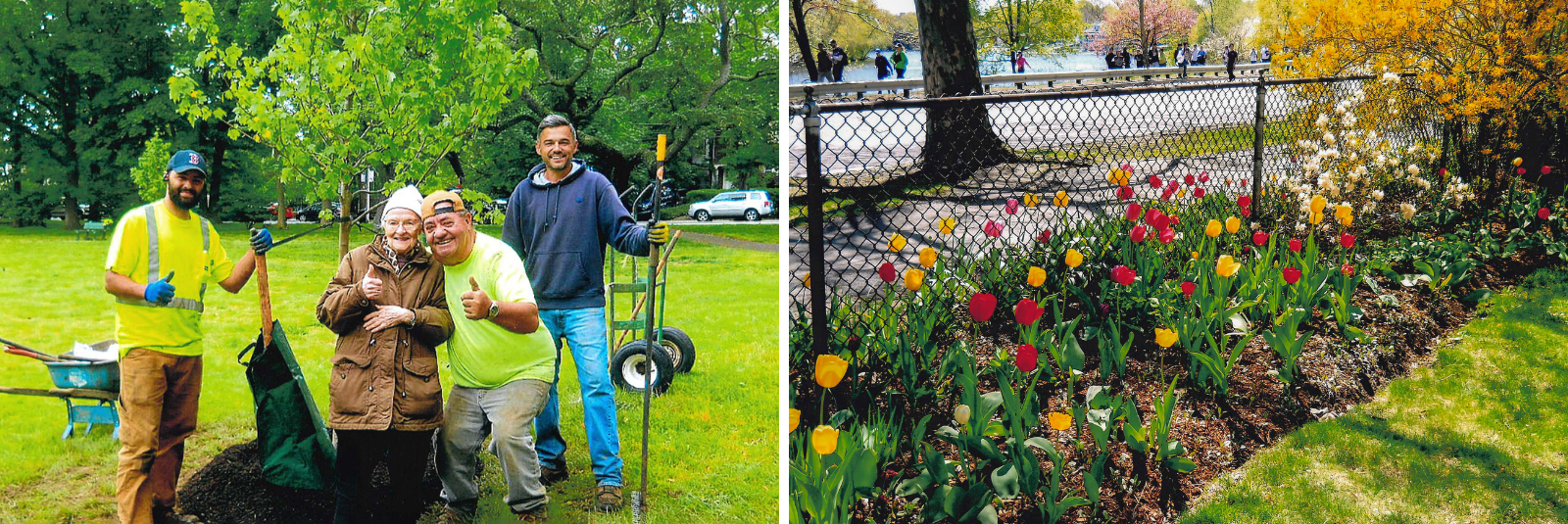
Sekler has especially devoted her time to a playground in the park near where she lives. “It was in terrible condition,” she says. In 1982, she began to clean it up. Sekler then began a planting program, which eventually expanded beyond the playground to six blocks. “We’re all volunteers except for a landscaper who’s been with us for over 20 years,” she says. “All this work would not have been possible without the help of hundreds of volunteers over the years and the generosity of neighbors, passers-by, and friends who donate funds and plant materials.”
During the pandemic, the trust was able to get Memorial Drive closed on Saturdays, as well, but for now the closure is back to only Sundays. The road closure has been an influential initiative. When Riverbend Park formed, to the trust’s knowledge only Central Park and DC’s Rock Creek Park had done something similar. “In a way, Riverbend Park as a road closure was one of the earliest attempts to create more recreational space for people,” Sekler says. “This is an idea that has spread widely.”
When to visit: 11 a.m. to 7 p.m. on Sundays, from the last Sunday in April until the second Sunday in November. Usually, the closure extends from Western Avenue to the Eliot Bridge. Due to redesign work, it currently functions between Western Avenue and the Anderson Bridge.
Sekler’s favorite part: “The upper part, closer to where I live, is the most intimate area of the river—it’s not as wide as it is farther down. We have a lot of canoeing and kayaking in the area.”
What you’ll see: Lots of shrubbery and, depending on the season, daffodils, tulips, and lilies. Fun fact: What are colloquially called the area’s “sycamore” trees, first planted along Memorial Drive in 1897, are actually London plane trees.
Get involved: Riverbend Park is always looking for volunteers for planting and watering.
Jackie Greenberg ’73
Everglades National Park
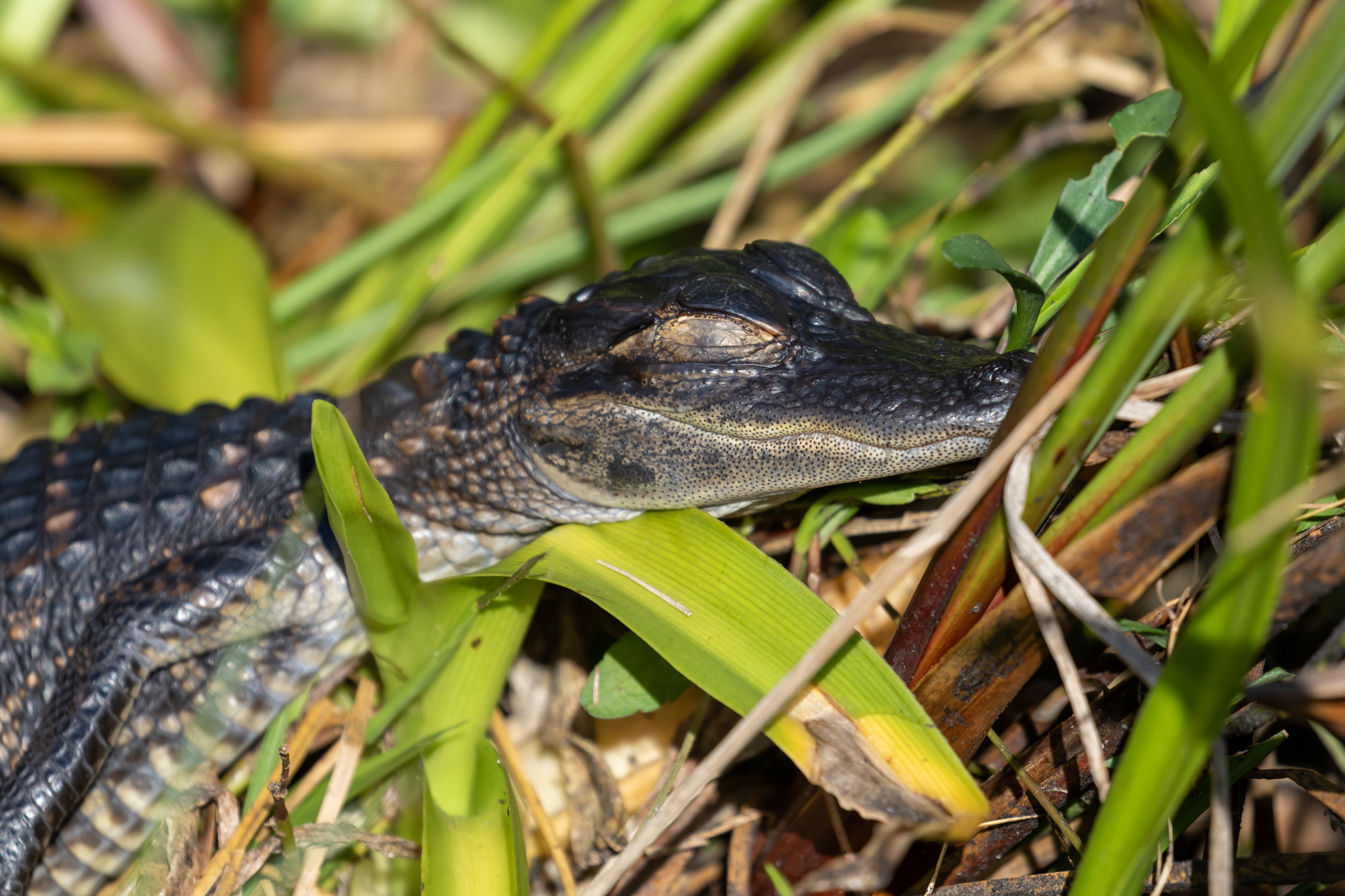
“Sleepy Baby Gator (1),” in Shark Valley, by Matthew Paulson, CC BY-NC-ND 2.0
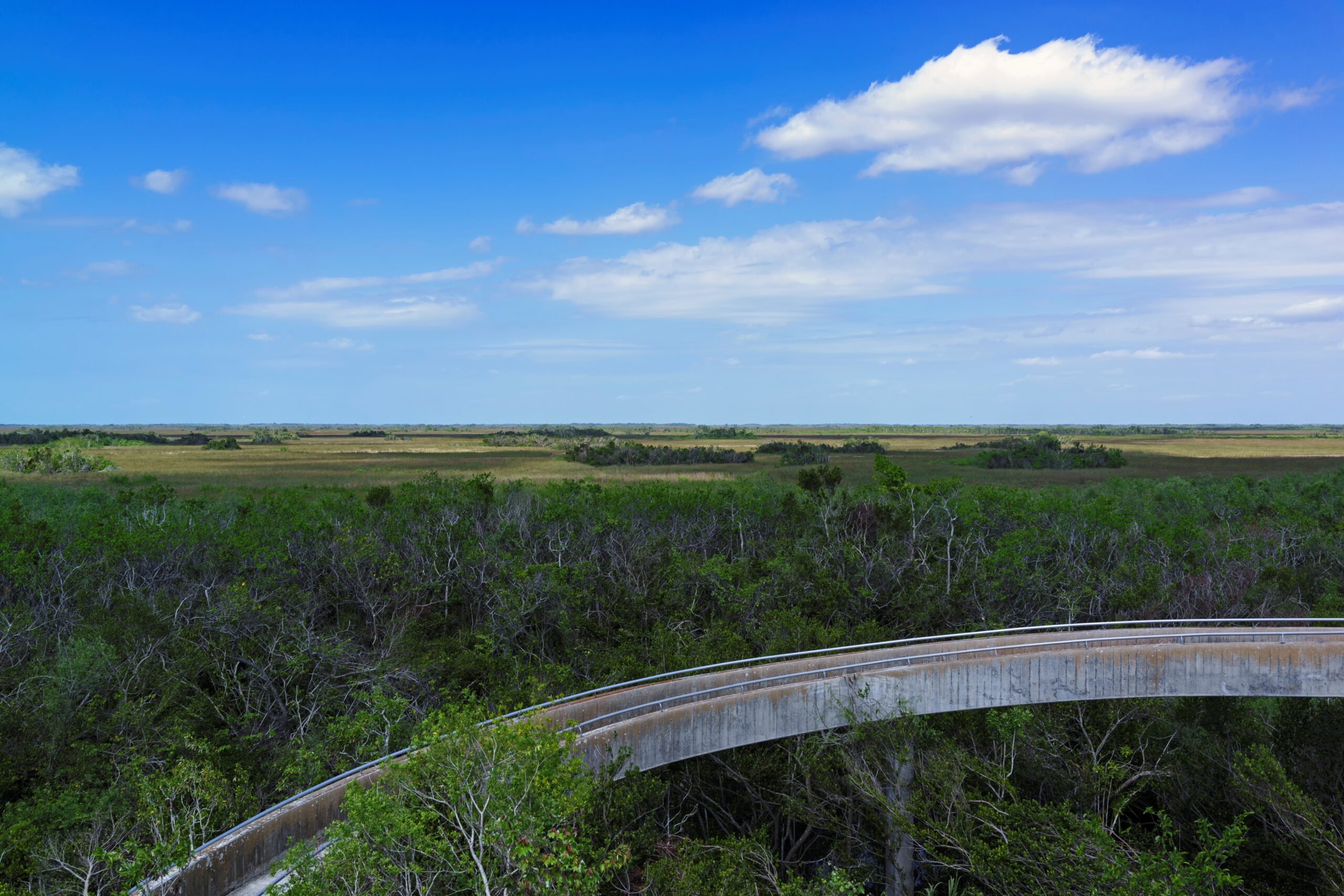
Before she volunteered with Pelican Harbor Seabird Station, Jackie Greenberg was a volunteer bicycle docent in Everglades National Park. She was a long-distance cyclist and saw signs for the position posted in local bike shops. It sounded like fun. They accepted her for training once they learned she could ride a good distance in the heat—“I don’t really like to get into bike clothes for less than 8 or 10 or 15 miles,” says Greenberg. She began to ride the 15-mile loop of Shark Valley, a freshwater slough marsh, which is a shallow, grassy wetland. That part of the park has sawgrass, spikerush, and flowers like purple bladderwort, pickerelweed, and Florida spider lily.
As a bike docent, she would ride with another cyclist and stop to answer the questions of visitors who were walking or cycling themselves: “Yes, that’s an alligator. No, do not get within 15 feet of it.” She also carried medical supplies and water for visitors, reminded people of the rules (no skateboards, scooters, or rollerblades), and helped with bike chains and other bike issues.
There were lots of animal encounters along the trail. Alligators congregate there in winter and spring, with great blue herons predating on their young. Snowy egrets and different tortoise species are also common. Besides keeping people away from alligators, the other challenges of being a bike docent were the summer heat and visitors bringing dogs, which isn’t allowed.
At the time, Greenberg lived an hour away and would drive to the park twice a month for shifts. During the government shutdown in 2018, the park was still open although the professional staff were not present. So Greenberg took on extra duties in the visitor center, working an eight-hour shift to help keep the park functional. She remained a bike docent until she moved farther away about six years ago. She still enjoys being outdoors as much as possible.
Fun fact: Although crocodiles usually live in brackish water or saltwater, there’s one that lives in Shark Valley. “We don’t know why this female crocodile is hanging out in freshwater, but she’s been there for a number of years,” Greenberg says.
Tips for visiting: Bring plenty of water and climb the observation tower for good views.
The benefits of being a bike docent: “It’s important when you’re retired to have things to do,” says Greenberg. “It was always good exercise, but it was most fun interacting with the visitors.”