
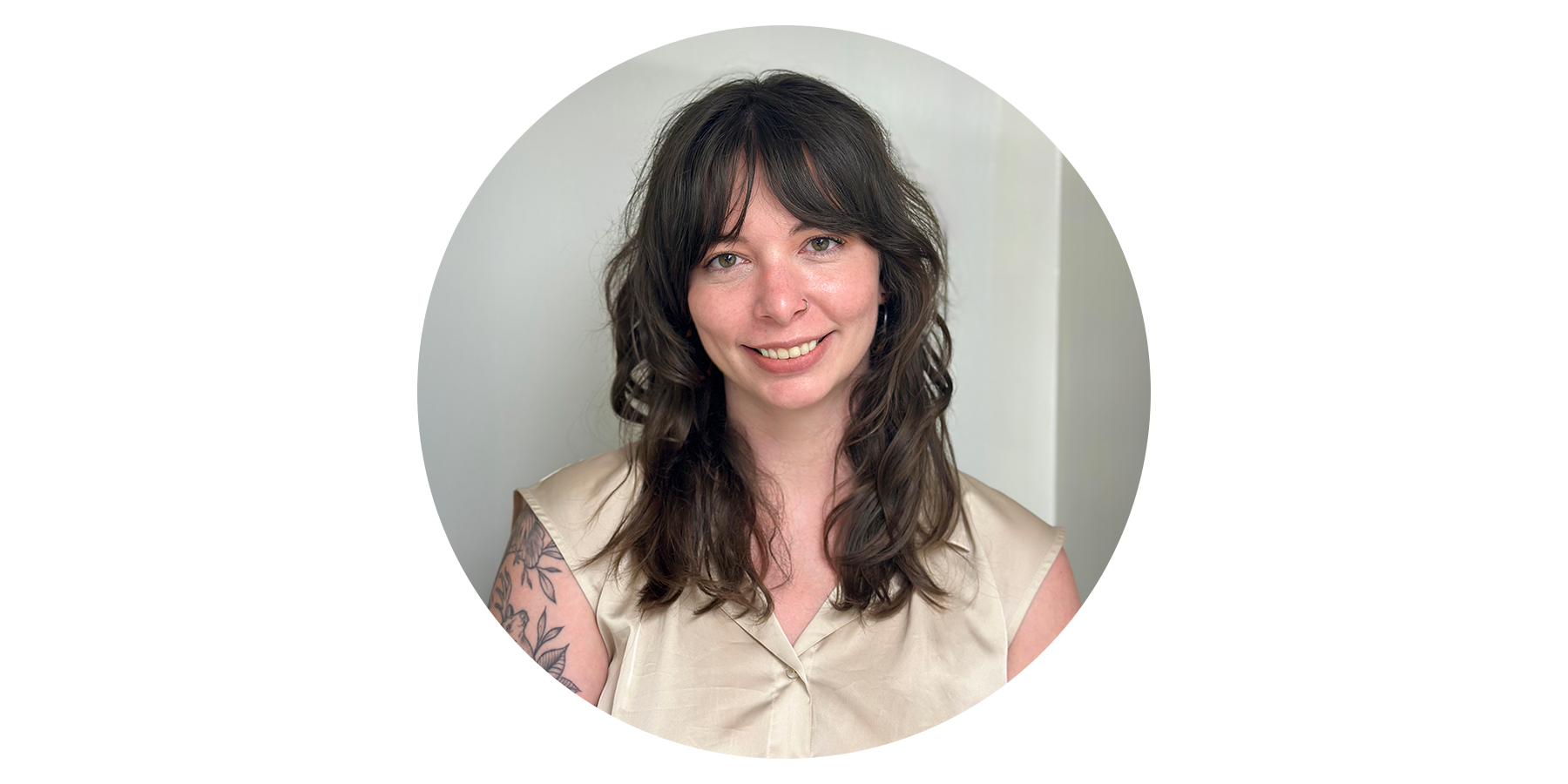
Emma Woodoff-Leith Thorn ’14 has brains on her mind. As a research manager at the Icahn School of Medicine at Mount Sinai in New York, she helps manage the Neuropathology Brain Bank & Research CoRE, a collection of postmortem human brain tissue used for research into dementias and movement disorders like Alzheimer’s disease, Parkinson’s disease, Lewy Body Dementia, Frontotemporal dementia, stroke cases, and traumatic brain injury. There are around 250 brain banks worldwide.
“Many of these diseases can’t be diagnosed during life. It’s a huge block in how research funding is spent, how people think about studying these diseases,” says Thorn. “A clinician can give you a best professional guess—but you can only get the definitive answer at autopsy. If this was more commonly known, there wouldn’t be such a decline in autopsies and people signing up for brain and body donation or funding for this research. And other species don’t naturally get things like Alzheimer’s disease, so you can’t have a perfect animal model.”
The brain bank is part of a core lab, meaning Thorn’s team provides services and tissue for other research labs from their collection of nearly 500 brains. When a patient or registered donor dies, Thorn might be called in immediately. The team comes together to coordinate the arrival of the donor and to process their brain.
They also provide diagnoses to families of donors. “We know these patients truly wanted this,” says Thorn. “We keep the human part of it in mind. It can be easy to think of it as just a tiny piece of brain tissue without realizing all of the work, time, and money that we, and the donor’s family, went through to make it happen.”
For Thorn, the best part of her dynamic job is that there’s no typical day. With a 24/7 hotline, meetings with Ph.D. and post-doc students, and other lab investigators, days can run long, but shared curiosity and camaraderie bring them together. “People who work here stay late just talking about interesting cases, doing our own research, teaching ourselves new things about what we see each day,” she says.
When Thorn first arrived at Mount Sinai, she had recently earned her M.A. in biological anthropology and worked in cardiology clinical trials. At the time, Mount Sinai’s pathology department held demonstrations of open “brain cuttings”; she signed up and asked the session’s lead—who is now her boss—about jobs in pathology. Thorn filled an open position in 2020. She started as research associate and is now the brain bank and research manager.
Raised in Brooklyn, Thorn chose to attend Goucher College for her undergraduate degree in part because of her familiarity (she’d visited her brother, Eli Woodoff-Leith ’11, D.V.M., on campus) and also because she wanted to live somewhere outside of her comfort zone—a small school in an insulated area, surrounded by forest. “Being so shy and growing up in a big class, I didn’t have to speak up as much,” she says. “My feedback was always, ‘She’s a great student, but she needs to speak up more.’” Intimate class sizes at Goucher ensured that she did participate more. After a year, Thorn found that she loved it. She enjoyed learning about humans from all different perspectives and completed her B.A. in psychology.
“Searching for an answer—that’s what keeps me engaged in this type of job,” she says. “I just want to know things. People’s thoughts, their secrets. I want to find the answer. I want to read the back of the book first. Getting to see the case through, from beginning to end, and finding out what happened. It makes me very proactive in my role. I want to do more and more.”
Thorn is currently studying prerequisites for a pathology assisting M.S., still pursuing the puzzles of humanity, still doing more and more.