
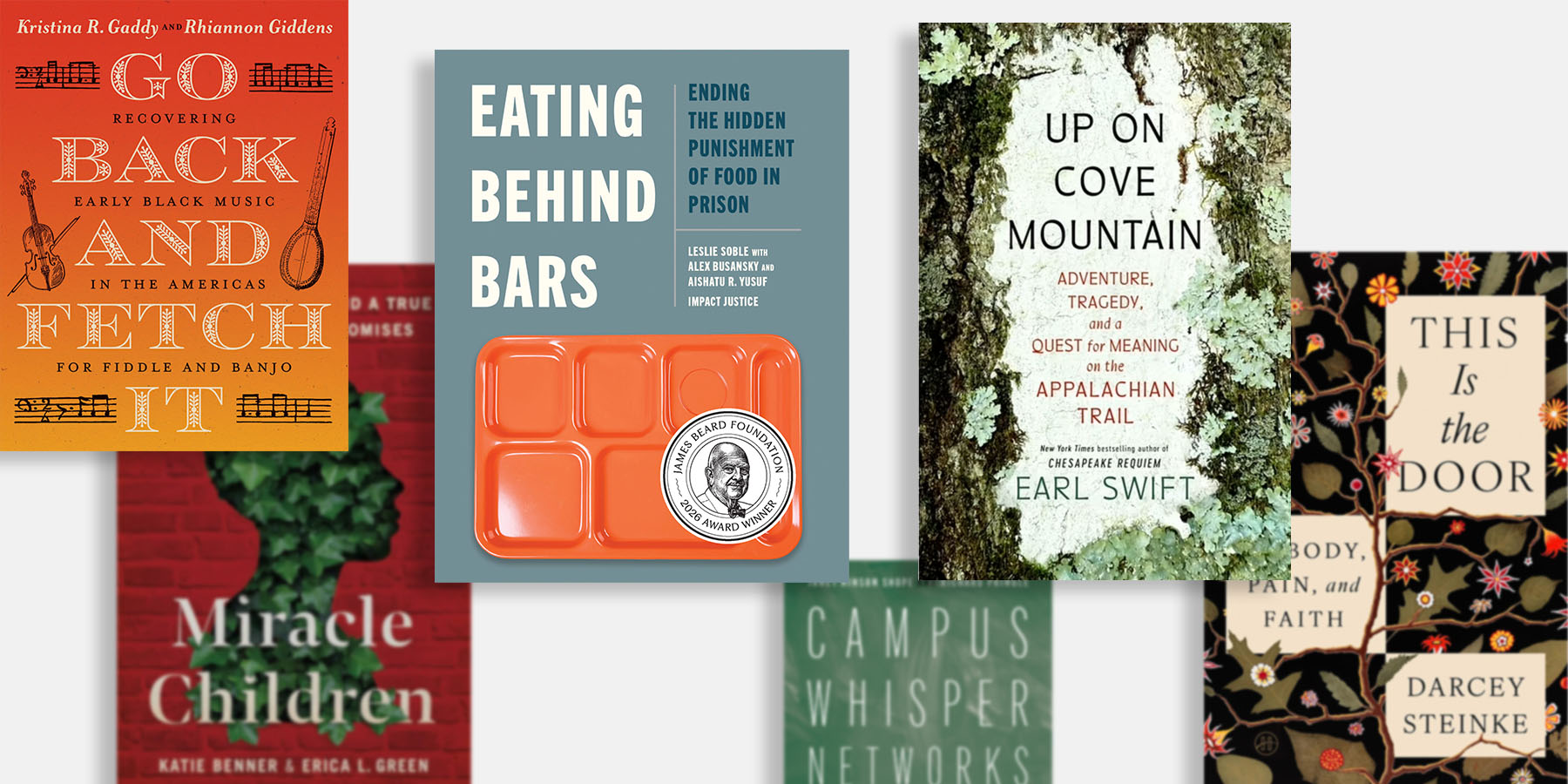
Nonfiction
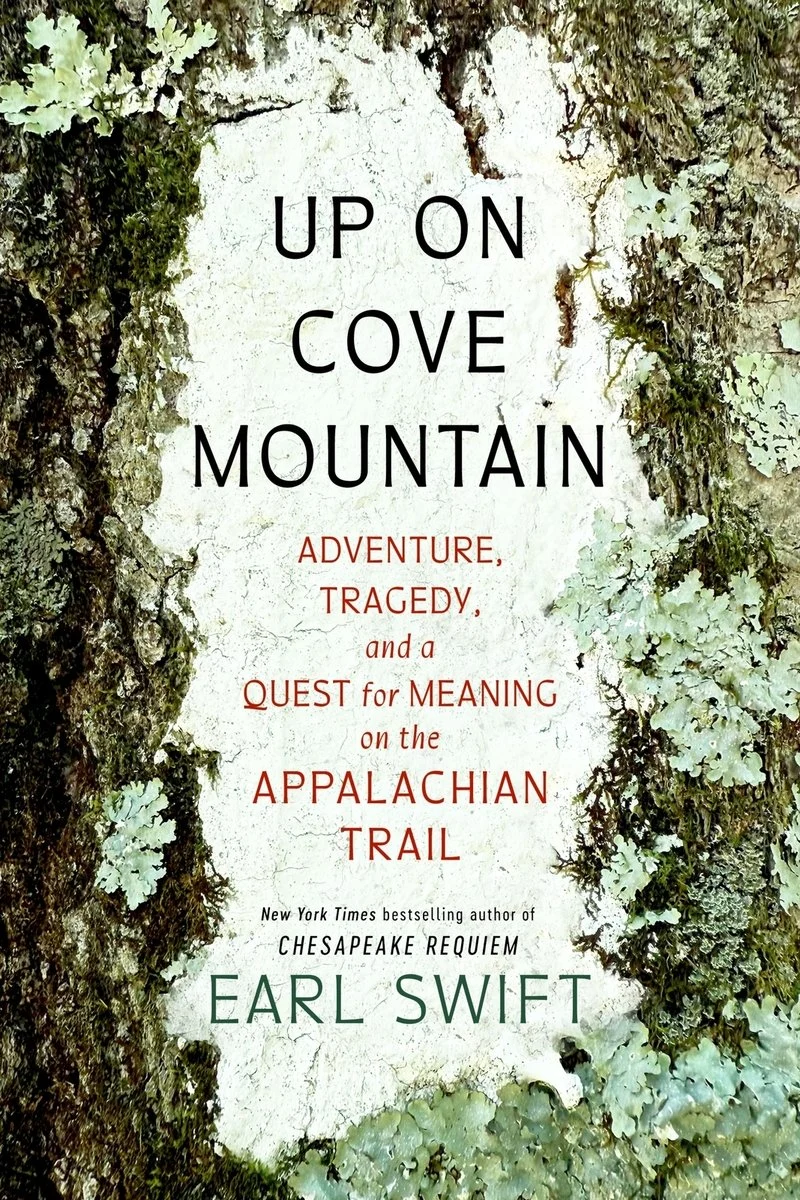
Up on Cove Mountain
Adventure, Tragedy, and a Quest for Meaning on the Appalachian Trail
By Earl Swift, M.F.A. ’11
Mariner Books, an imprint of HarperCollins Publishers
August 18, 2026; available for pre-order
From the New York Times bestselling author of Chesapeake Requiem comes an intricately plotted tale of two end-to-end adventures through the Appalachian Trail’s 2,200 miles, braided around a third strand, that of the trail’s most notorious tragedy that has haunted Earl Swift for 30 years.
In 1990, a youthful Earl Swift backpacked the Appalachian Trail from Maine to Georgia, a transformative experience that colored every aspect of his later life. He emerged from his hike across the rugged, sky-high roof of 14 eastern states a sharper and more organized thinker, a better problem solver, and a committed outdoorsman.
But he also left the AT with baggage: Early in his odyssey, he spent time with a couple of other southbounders, who were friendly, capable, and doing everything right, but who were nonetheless murdered weeks later at a mountaintop campsite in Pennsylvania—a fit of violence that the killer never explained.
Half a lifetime later, Swift returned to the trail to find out whether he was still, in his sixties, equal to the AT’s roller-coaster terrain. Driving him, too, was a quest for answers that had nagged at him since that first hike: What had happened at that campsite to turn two smart, bighearted people into prey? Why had fate chosen them, when other hikers—Swift included—seemed more likely candidates? And how could such a grisly episode have unfolded in the backcountry’s sylvan loveliness, not to mention one of the safest places around?
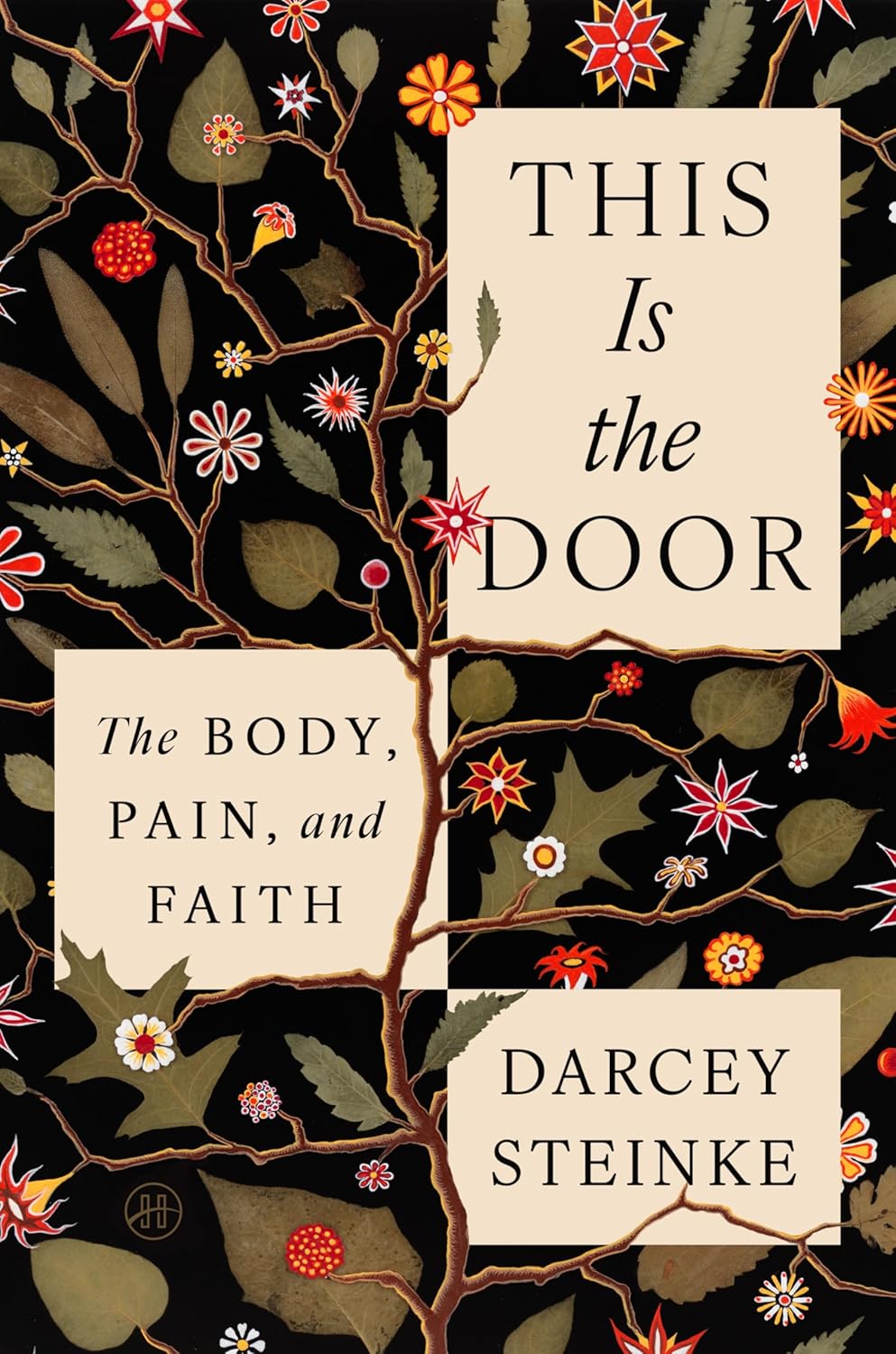
This Is the Door
The Body, Pain, and Faith
By Darcey Steinke ’85
HarperOne, an imprint of HarperCollins Publishers
February 24, 2026
Darcey Steinke, acclaimed author of Flash Count Diary and Suicide Blonde, explores the world of pain for those who suffer and those who love them.
Steinke gets to the heart of pain with her usual brilliance, humor, candor, and empathy. In chapters that trace the body—“The Spine,” “The Heart,” “The Knees,” and more—she introduces sufferers to new and ancient understandings of pain through history, philosophy, religion, pop culture, and reported human experience. Leaving no stone unturned, Steinke takes readers under the knife, through the archives, and across oceans. She interviews working physicians, analyzes the writings of Frida Kahlo, recounts her own back surgery, and journeys to Lourdes, where she finds herself invited to participate in the famed pilgrimage site’s rituals.
For readers of Joan Didion, C. S. Lewis, Sheila Heti, and Leslie Jamison, This Is the Door beautifully illuminates the experience of pain and its myriad effects on the body, mind, and soul. Whether you are hurting or know someone who is, whether your pain is somatic or spiritual, This Is the Door is a revelation.
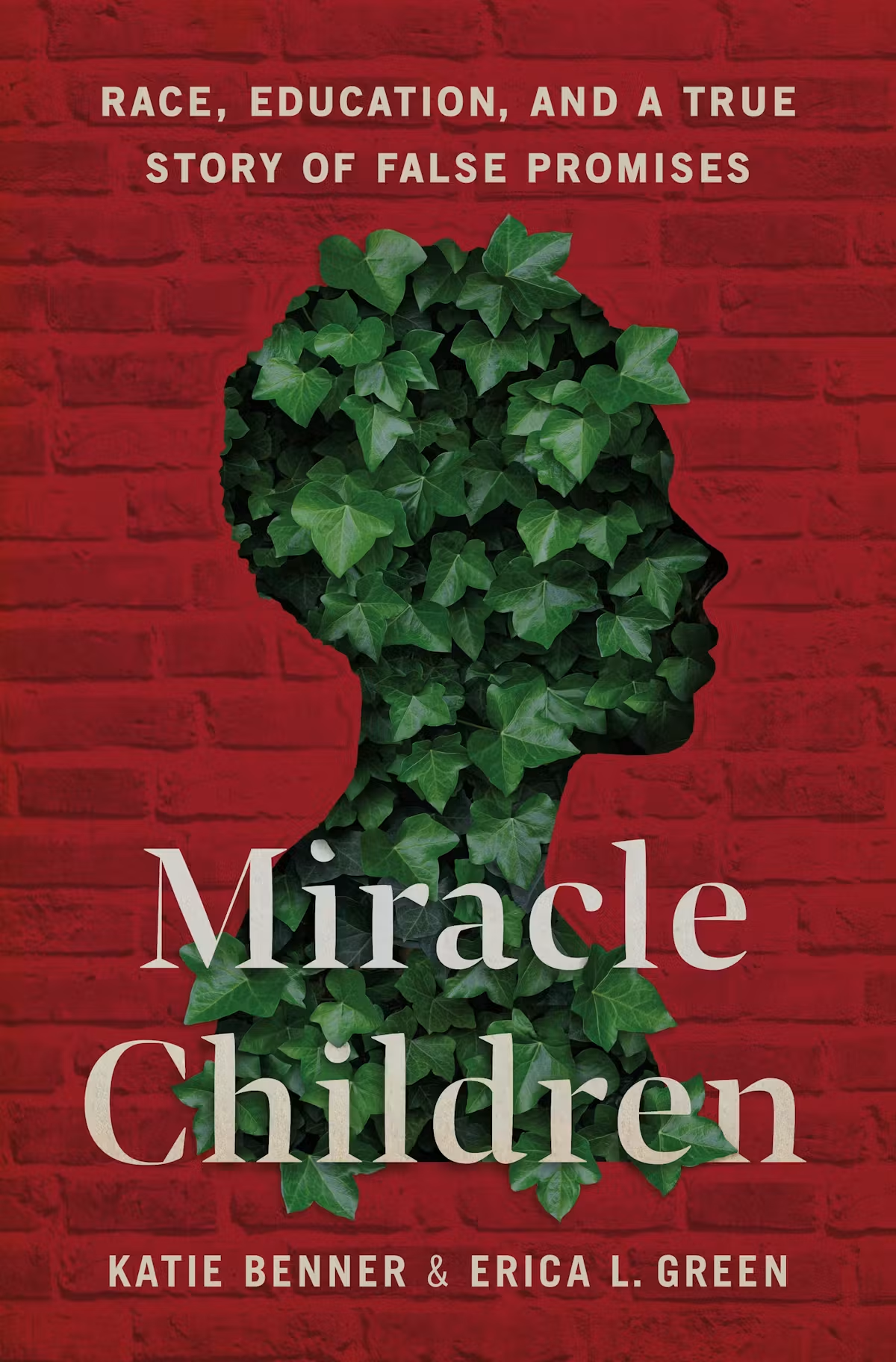
Miracle Children
Race, Education, and a True Story of False Promises
By Katie Benner and Erica L. Green ’07
Metropolitan Books, an imprint of Macmillan Publishers
January 13, 2026
A riveting investigation into a school, a scam, and a notorious college admissions scandal that exposes the inequalities and racial segregation of American education, from two award-winning New York Times journalists.
T.M. Landry College Prep, a small private school in Breaux Bridge, LA, boasted a 100% college acceptance rate, placing students at nearly every Ivy League university in the country. The spectacle of Landry students opening their acceptance letters to Harvard and Yale was broadcast on television and even celebrated by Michelle Obama. It became a national ritual to watch the miraculous success of these youngsters—miraculous because Breaux Bridge is one of the poorest counties in the country, ranked close to the bottom for test scores and high school graduation rates. T.M. Landry was said to be “minting prodigies,” and the prodigies were often Black.
How did the school do it? It didn’t: It was a scam, pulled off with fake transcripts and personal essays telling fake stories of triumph over adversity. Worse, Landry’s success concealed a nightmare of alleged abuse and coercion. In a yearslong investigation, Katie Benner and Erica L. Green explored the lives of the students, the school, the town, and Ivy League admissions to understand why black teens were pressured to trade in racial stereotypes of hardship for opportunity.
Gripping and illuminating, Miracle Children argues that the lesson of T.M. Landry is not that the school gamed the system but that it played by the rules—that its deceptions and abuses were the outcome of segregated schools, inequitable education, and the belief that elite colleges are the nation’s last path to life-changing economic opportunity.

Eating Behind Bars
Ending the Hidden Punishment of Food in Prison
By Leslie Soble, M.A.C.S. ’17, with Alex Busansky and Aishatu R. Yusuf
The New Press
October 28, 2025
Winner, 2026 James Beard Media Award for Food Issues and Advocacy
A vivid exploration of the food crisis affecting millions of incarcerated Americans, Eating Behind Bars sheds new light on the power—and peril—of what’s on our plates.
Prisons and jails are America’s hidden “food deserts,” where hunger and malnourishment coexist with shocking levels of food waste because much of what is served is so awful it ends up in the trash. Breakfast, lunch, and dinner are tense and humiliating when incarcerated people are forced to eat in silence, finish meals within minutes, and disciplined with food deliberately worse than the standard fare.
This disturbing portrait came to light in 2020 when the nonprofit Impact Justice released the first-ever national examination of food in prison, catapulting the issue from the margins of prison litigation to the center of national conversations about mass incarceration and food justice. This landmark book digs deeper, revealing a systemic drive to cut costs at the expense of health and decency. It is also a story of resistance and hope, chronicling how incarcerated people and their allies are fighting back, as well as exploring “farm to tray” programs, chef-led initiatives, and other ways to make food in prison a source of healing and bring dignity back to the table.
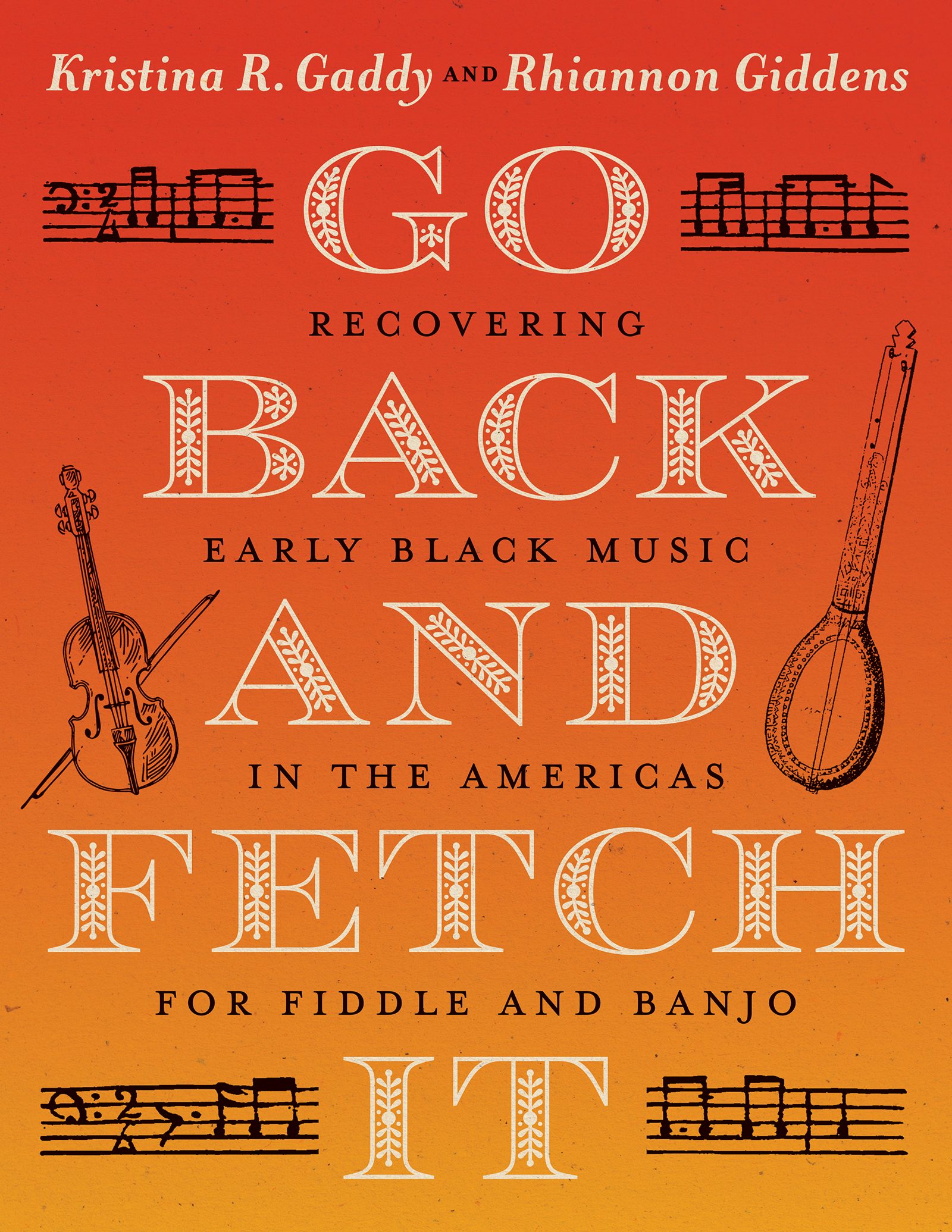
Go Back and Fetch It
Recovering Early Black Music in the Americas for Fiddle and Banjo
By Kristina R. Gaddy, M.F.A. ’15, and Rhiannon Giddens
The University of North Carolina Press
September 16, 2025
The roots of African American music made accessible and playable for the first time in one place.
For the first time, this groundbreaking songbook collaboration by music writer Kristina R. Gaddy and Grammy Award winner Rhiannon Giddens makes 19 examples of early Black Atlantic music accessible and playable for today’s musicians, music enthusiasts, and historians. Presenting music from 1687 through the 1860s in modern treble clef and banjo tablature, along with the rich stories behind each song, Gaddy and Giddens take readers on a journey from the Caribbean across the Americas.
Immensely readable for amateurs and professionals alike, Go Back and Fetch It explains the significance of early Black Atlantic music and how the patterns of tunings, melodic lines, and lyrics shed light on the impact that Black American music has had on 19th-century popular music, early country, old time, and bluegrass. Each tune pairs with an engaging essay on its historical background and how the tune transformed over time, as well as information about the collector. Deeply researched and carefully approached, this essential source restores the roots of Black music to the musical canon.
Young Adult & Children’s Books
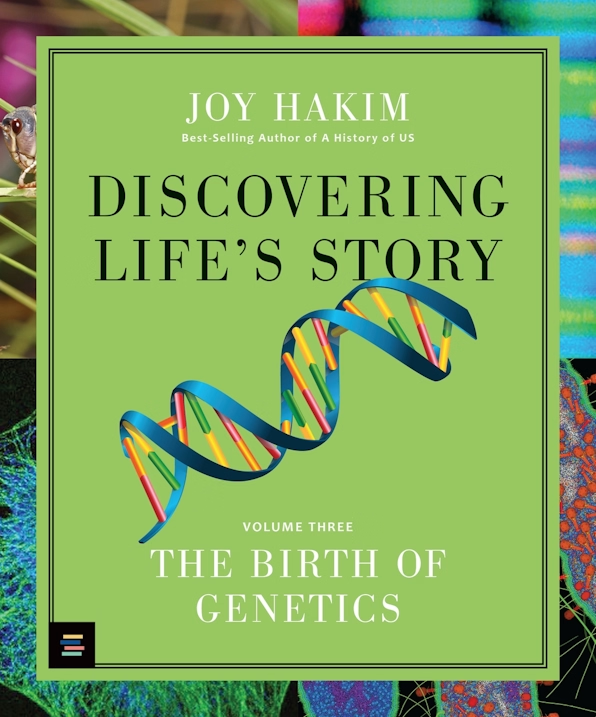
Discovering Life’s Story
The Birth of Genetics
By Joy Hakim, M.Ed. ’54
MITeen Press
February 3, 2026
Can we crack the code to life itself? In the third volume in the Discovering Life’s Story series, scientists compete to decipher the genetic blueprint behind all life on earth.
It’s the dawn of the 20th century. Darwin has theorized that traits get passed down through generations, and Mendel has come up with a mathematical formula that predicts how traits reappear over time. But a key mystery remains: Is there a recipe for living beings? If there is, where is it hidden? With the help of powerful new microscopes and X-rays, scientists peer ever closer into cells, searching for answers. They find chromosomes, tight coils of DNA, mutations that introduce new variations in species, and proteins that dictate how living things function. Walter Sutton observes that chromosomes come in pairs. Nettie Stevens discovers the X and Y chromosomes that define biological gender. And Rosalind Franklin, James Watson, and Francis Crick compete to be the first to understand DNA’s structure. But is it proteins or DNA that carry the secrets to life’s blueprint?
In Birth of Genetics, Joy Hakim, author of the bestselling series A History of US, continues charting the path of human discovery as scientists race to unravel our genes and the mysteries they hold.

The Still Further Adventures of Jelly Bean
By Amy Meislin Pollack ’74
Nightingale Books, an imprint of Pegasus Publishing
September 25, 2025
In The Still Further Adventures of Jelly Bean—the third book in The Adventures of Jelly Bean series—Jelly Bean has to deal with more changes.
Faced with the departure of her best friend, Jelly Bean struggles to adapt to new dynamics in the classroom. Life also becomes more difficult when her grandmother, who had always had the time to listen to her, gets re-married and moves away.
Together with her trusty and beloved dog, Roger-Over, and her wonderful new aunt, who takes a keen interest in her, Jelly Bean continues navigating and adapting to life’s challenges. Join her on this exciting journey with its unexpected twists and turns, as our feisty heroine blossoms and grows.
Faculty Book
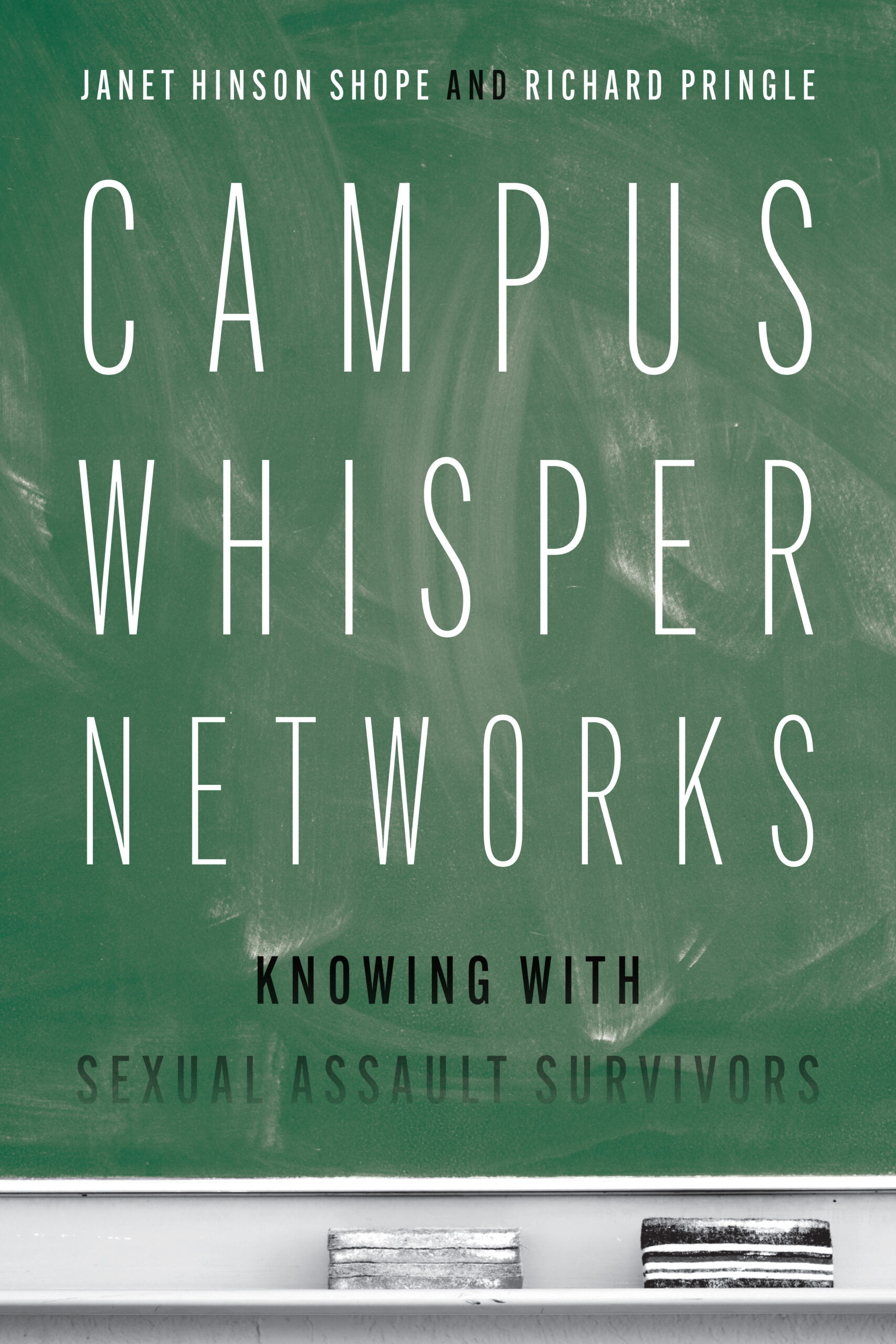
Campus Whisper Networks
Knowing With Sexual Assault Survivors
By Janet Hinson Shope, Professor of Sociology and Associate Vice President for Institutional Research, and Richard Pringle, Professor Emeritus of Psychology
Rutgers University Press
March 10, 2026
Campus Whisper Networks examines how personal knowledge about student sexual assault circulates within college campus communities. Based upon both qualitative and quantitative survey data, Janet Hinson Shope and Richard Pringle’s research demonstrates that students who have been sexually assaulted tell someone—almost always a friend. Most college students know someone who has been assaulted. Simply knowing, by means of relationships, that one or more peers have been assaulted affects the knowers, and the effects reverberate unevenly across campuses.
Shope and Pringle highlight the structural properties that prohibit relational knowledge from becoming official institutional knowledge, confining it to whispers and secrecy within informal spheres of knowledge. The rules governing the circulation of such knowledge create an uneven epistemic field of sexual assault. This uneven field is consequential for the communities, affecting survivors and their confidants and shaping student views of the college community. Campus Whisper Networks demonstrates how personal and institutional avoidance, both the “need to not know” and “no need to know,” creates knowledge gaps that hide the community’s wounds and prevent personal knowledge from becoming social knowledge.