
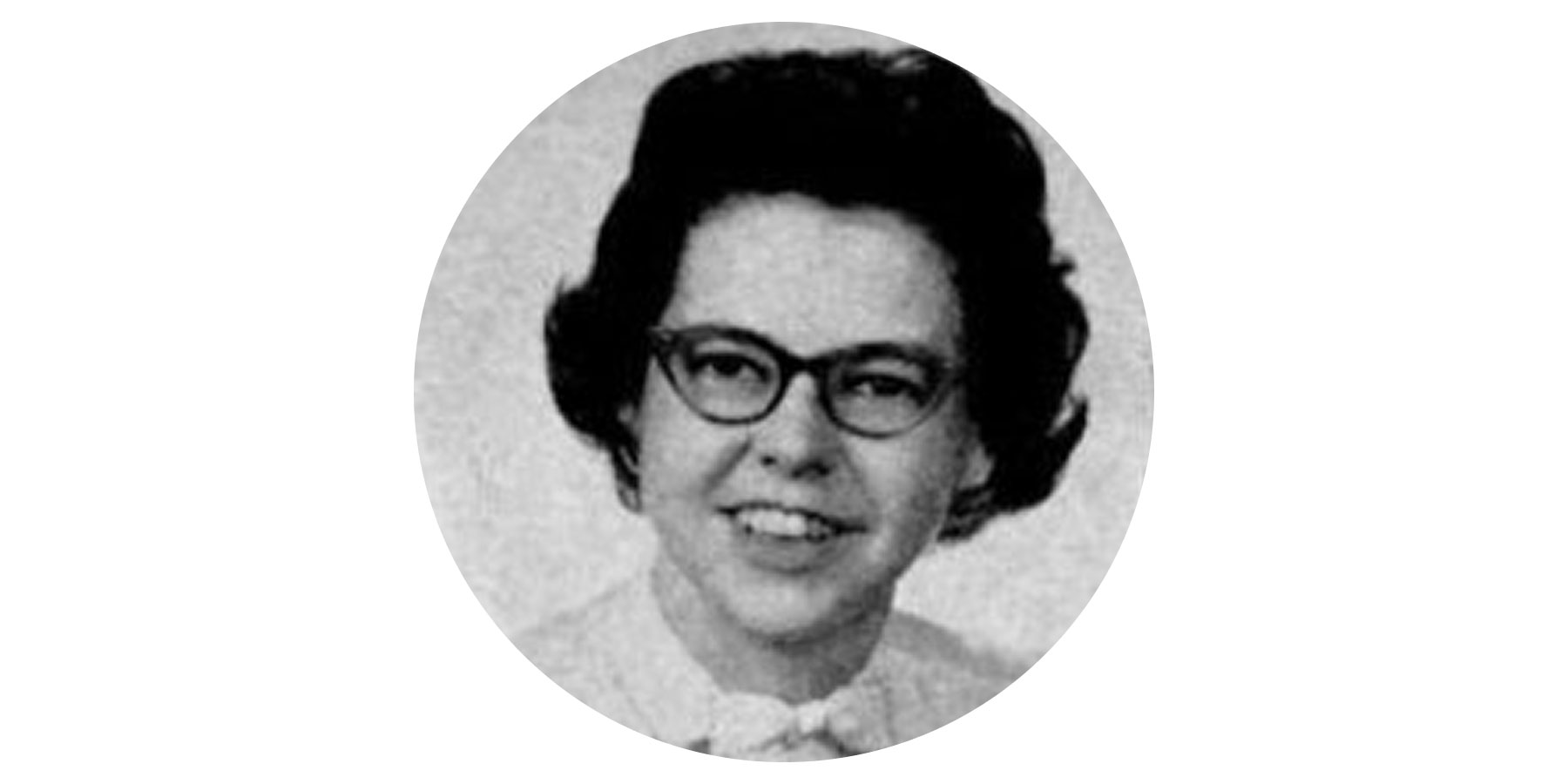
June Leah Mazer was born in Baltimore and enrolled at Goucher in 1945. She majored in English and loved theater—she was active in the drama club, Masks and Faces, both as an actor and a crew member. Mazer joined the feature staff of the student newspaper, Goucher Weekly, in 1946, and became the feature editor a year later.
Mazer had a big impact on the newspaper. In October 1947, she cowrote a piece for the Weekly supporting a boycott of Ford’s Theatre, a major theatrical venue in Baltimore, because it had segregated seating. She also wrote that, in solidarity, the Weekly had stopped reviewing Ford’s productions: “Believing that students must be in the forefront of the fight to bring this nation out of the Civil War period, Weekly has discontinued the Ford reviews.” In 1948, she became editor-in-chief.
Her other college commitments showed she cared about Goucher and was interested in the world beyond. Mazer was a member of the City Girls’ Executive Board (for commuter students), the Faculty-Student Chapel Committee, a public relations committee to help promote the college, a steering committee for a Pan-American conference, and the International Relations Club, of which she eventually became president.
In the summer 1949 Goucher Alumnae Quarterly, referring to her post-graduation plans, Mazer wrote, “Summer: recreational therapist at Phipps, Johns Hopkins Hospital. Winter: God knows.” In fact, the Weekly reported the next year that she was now “the head of the Drama Department at Phipps Clinic” and was going to give a talk to the Mask and Faces club about “her work in Creative Drama With Psychiatric Patients.”
After working in a few hospitals, Mazer went to graduate school at Catholic University of America, earning a master’s degree in drama and social work in 1964 while working part time at the Turkish Embassy in DC. The very last mention of Mazer in Goucher’s archives is from the winter 1965 Quarterly, which ran a photo of her with a caption that said, “June Mazer ’49 is currently employed as a psychiatric consultant to the Occupational Therapy Association in New York.”
Her story picks up five years later when she moved to Los Angeles. According to Making Invisible Histories Visible, a guide created for a UCLA project, Mazer continued to work in psychodrama therapy and was involved in the lesbian activist community. She became the editor and publisher of the newsletter for the nonprofit Southern California Women for Understanding, which formed to enhance the quality of life for lesbians. In 1979, she met the love of her life, the film editor and preservationist Bunny Mac Culloch.
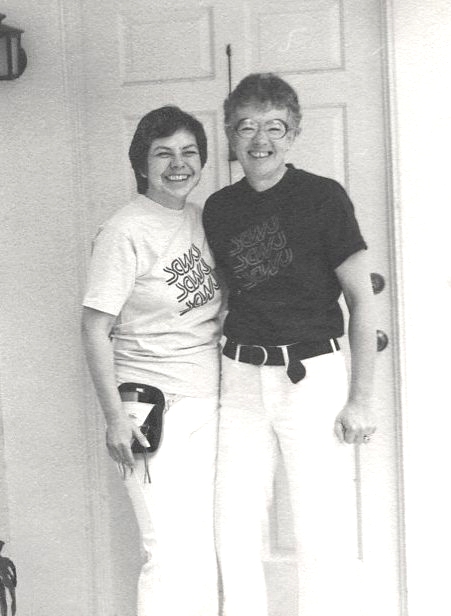
The couple were dedicated to preserving lesbian history, and they became the new keepers of the West Coast Lesbian Collections, which had been founded in the Bay Area by Lynn Fonfa and Cherrie Cox. The collections contained personal letters, artwork, and suffragist literature. They held the papers of the author Marion Zimmer Bradley (who wrote The Mists of Avalon) and the records of Diana Press, a lesbian/feminist publishing house that started in Baltimore in 1972. Mazer and Mac Culloch brought it all to their home in Altadena, CA, in 1985.
That same year, Mazer was diagnosed with cancer. She died two years later. In her honor, Mac Culloch renamed the archives the June L. Mazer Collection. In 1989, Mac Culloch and other activists moved the materials to the Werle Building, a city-owned building in West Hollywood. In 2000, they were renamed the June L. Mazer Lesbian Archives. The collections that Mazer and Mac Culloch saved continued to grow and to be maintained by volunteers until a full-time archivist and executive director were hired in 2025.
Today, the archives hold the personal and professional materials of notable women like the photographer Gay Block and Colonel Margarethe Cammermeyer, who served as a nurse in Vietnam and was discharged from the National Guard after stating during a security clearance interview that she was a lesbian. Cammermeyer sued, and a ban on gay people serving in the military was ruled unconstitutional. The archives also preserve everyday lesbian history, with photos, oral histories, and scrapbooks that show what life was like for lesbians throughout the past century.
The June L. Mazer Lesbian Archives are the largest archive on the West Coast preserving lesbian and feminist history and culture. It’s the legacy of the woman who, in referring to segregation in Baltimore, wrote that it was a “gross injustice of a widely practiced discrimination founded upon a prejudice with no basis in fact.”