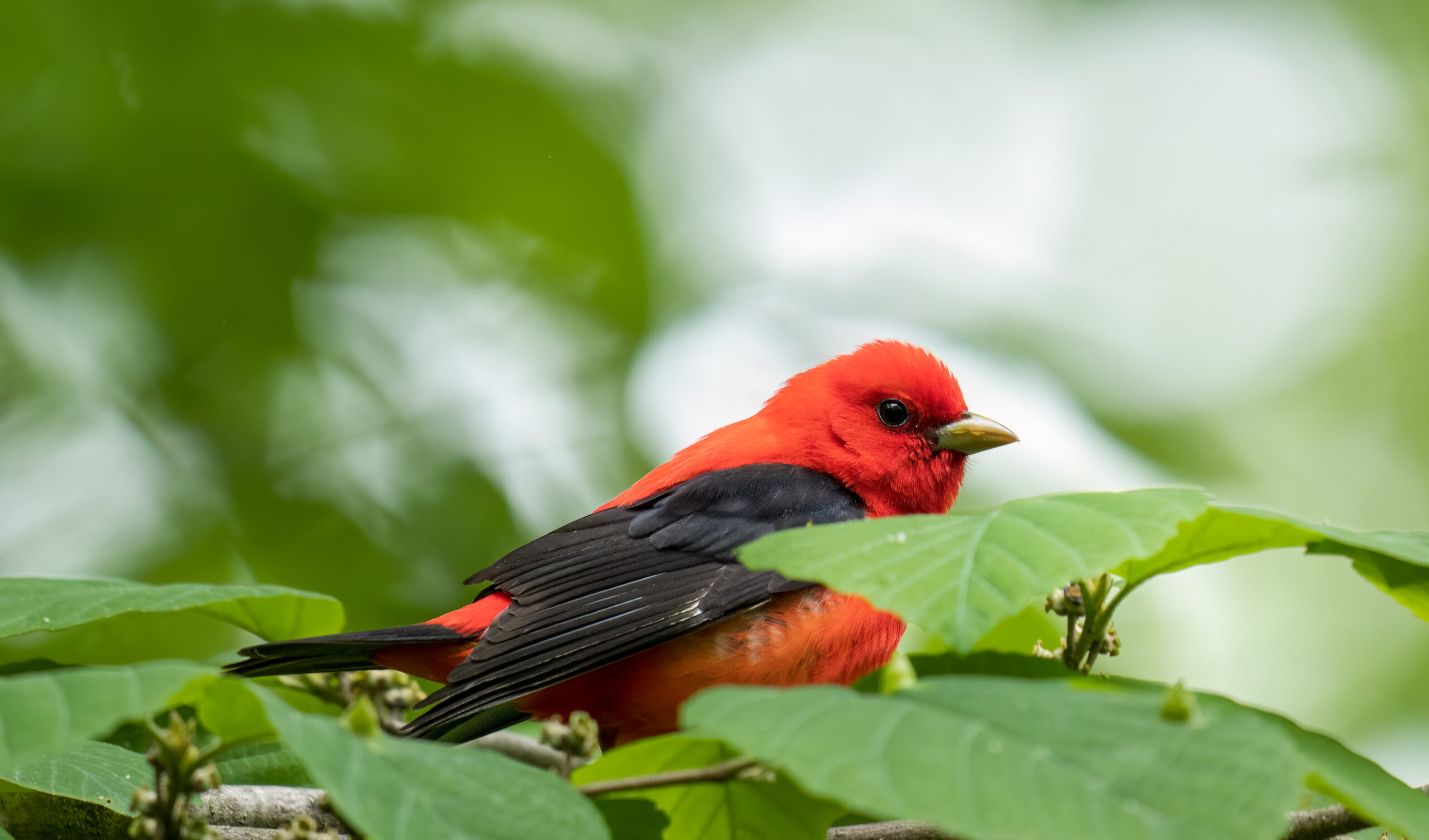
Photo: “Scarlet Tanager” by Danielle Brigida, CC BY 2.0
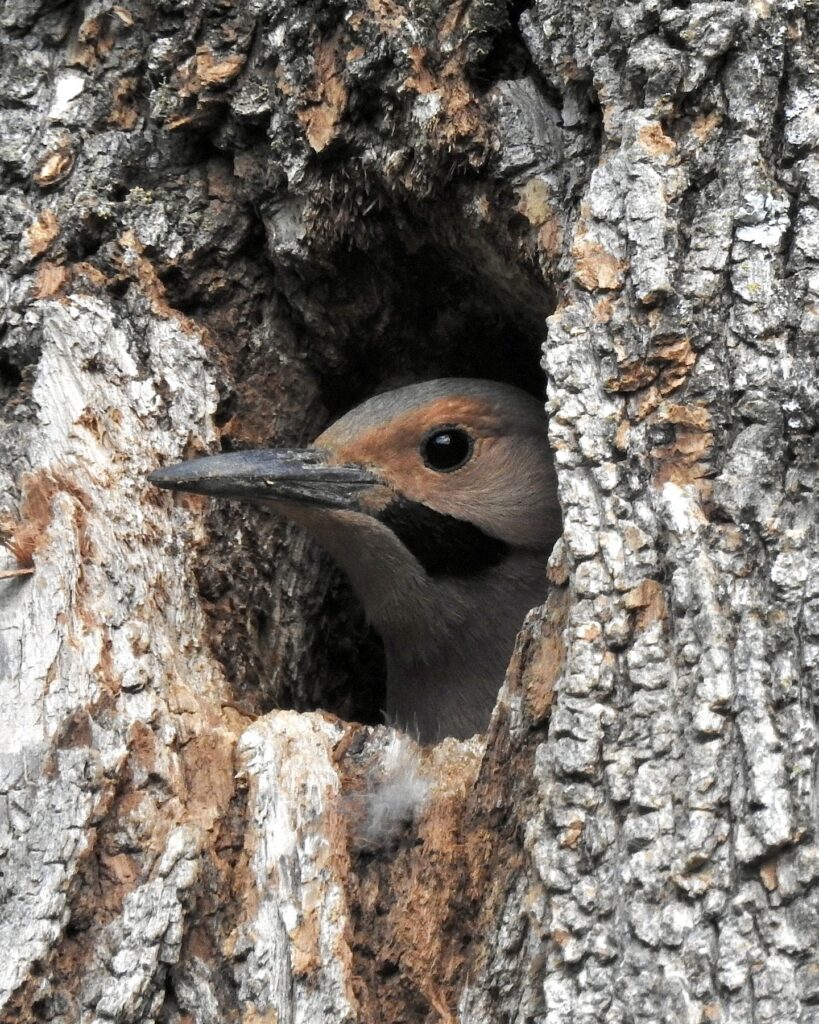
In late March, I walked the trails in Goucher’s woods looking for birds. Over the course of an hour, I saw an American robin, a northern cardinal, a northern flicker, a downy woodpecker, a dark-eyed junco, a red-breasted nuthatch, a white-breasted nuthatch, a common grackle, a mourning dove, an eastern phoebe, a turkey vulture, and a hawk I couldn’t identify.
Birdwatching, or birding, has exploded in popularity in recent years. There are a few good reasons for that.
- Birdwatching gets you outside—it can be good for your mental health and great for a little perspective.
- You can gamify it. It’s so satisfying to add a new bird to your life list—the compilation of every new bird you’ve encountered. (As a casual birder, I have 130 birds on mine.) With the eBird app, you can find places where rare birds have been spotted and log your own finds. With the Merlin app, you can identify birds by their calls. Social media has also helped popularize birding among younger generations.
- Birding doesn’t require money or training. People do spend money on field guides and cameras and scopes and binoculars and harnesses for their binoculars and trips to Indonesia and the Galápagos Islands, but for many people, the hobby is just as fun to do sitting in their backyard.
Most people have a story about how they started birding. In 2023, Carmen Honeywell ’26 was walking along the Northern Central Railroad (NCR) Trail in Baltimore County as she used the iNaturalist app to log bugs and other things she saw. She noticed other people on the app had logged observations of a scarlet tanager. “How does this thing exist in the U.S.?” she asked herself. “They look so exotic and cool.” The male scarlet tanager is a bright red bird with black wings that is common in the Northeast and Midwest during the spring and summer, but it can be hard to see high up in the trees where it often stays. “I finally spotted one and I realized it wasn’t a cardinal,” she says. “I was so excited. I couldn’t stop after that.” The scarlet tanager was Honeywell’s spark bird, or the bird that ignited her interest in birding. These days, she uses the eBird app to log each of her birding sessions. She’s seen about 160 birds in the U.S. and more overseas.

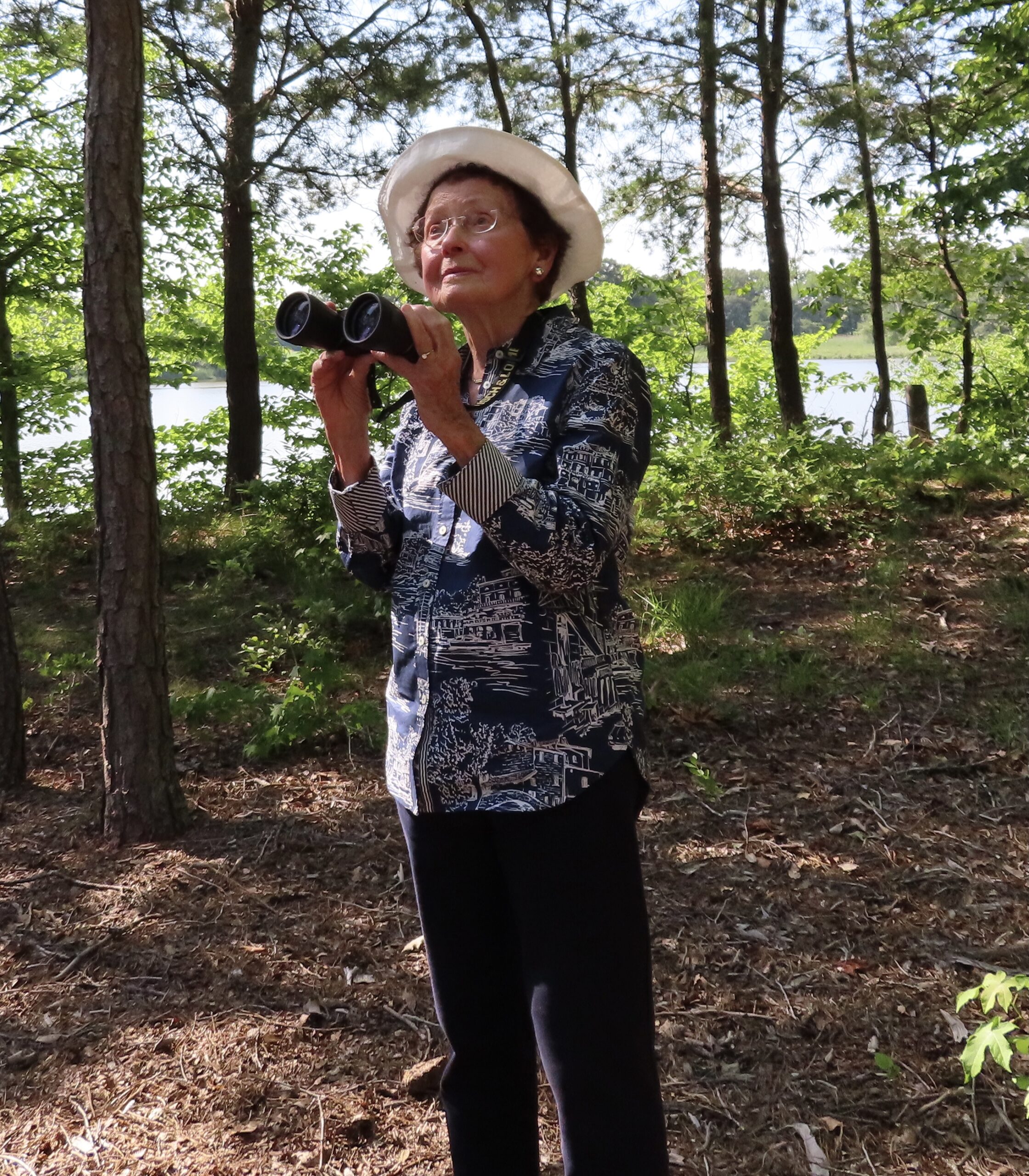
Sarane McHugh ’57 has been birdwatching for over half a century. It started when she took one of her daughters to a program for children. “One thing led to another, and soon we were members of Maryland Ornithological Society, which is valuable because they introduce you to so many facets,” she says. One Mother’s Day, McHugh received the gift of attending the society’s annual conference, which was in Ocean City that year. While there, she went on a birding boat tour 10 miles out to sea. “That was very exciting, to see what birds were offshore.” The family began to spend more time boating on the Eastern Shore, seeing waterfowl and ospreys. “I liked being outdoors, identifying more and more birds.”
Meg Ahrendt ’77 comes from a family of birders. Both of her grandmothers—one born in 1889 and one in 1896—were birdwatchers. “They started their day with their coffee and their birds in the yard and shared that with me,” she says. “Even though one lived in Wisconsin and one lived in New Mexico, it was all about birds whenever we visited.” Ahrendt remembers taking walks with her grandmothers, who would hear a bird call and tell her which bird it was, “which I still can’t do,” she says. Now a grandmother herself, Ahrendt is passing on the birding tradition to her five-year-old granddaughter, “which is a great joy.”
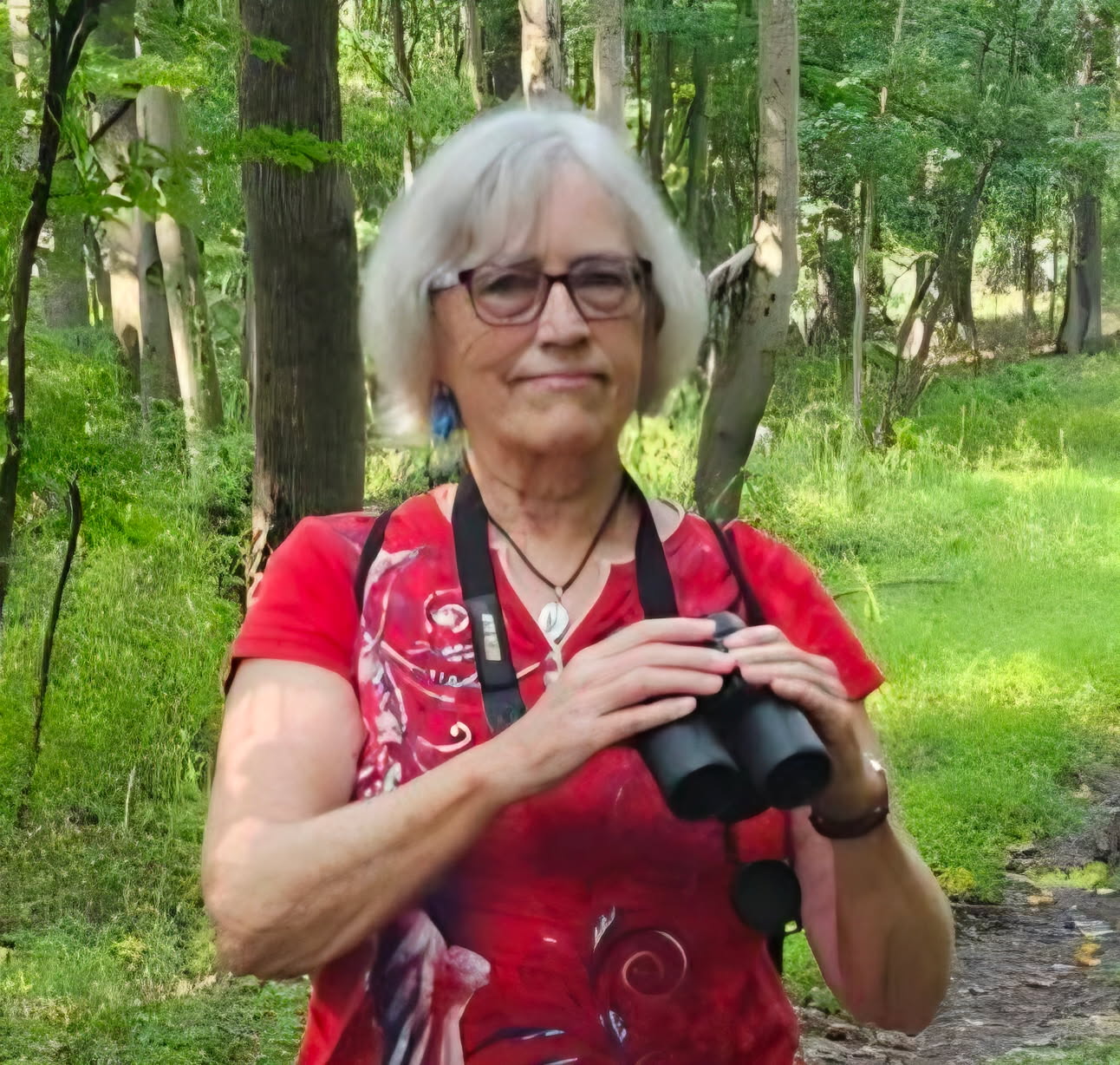
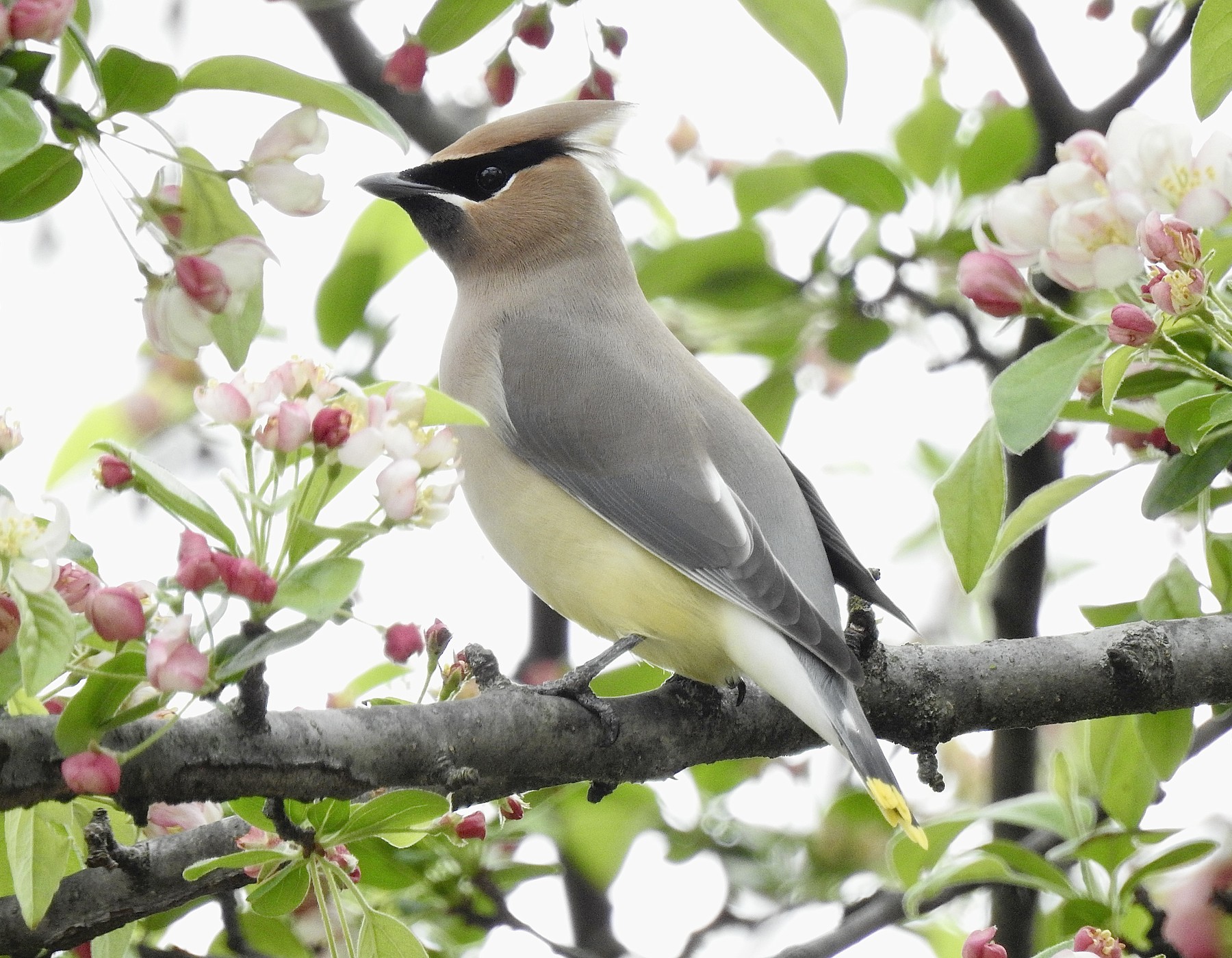
On my outing, walking some of Goucher’s three miles of trails that circle the 287-acre campus, I heard many birds that I’ve seen before but was unable to find this time: a Carolina wren, a Carolina chickadee, a tufted titmouse, a red-bellied woodpecker. That’s a standard, and frustrating, part of the birding experience. Some people will count birds they’ve only heard on their life lists, and others don’t. The tricky part is making sure it’s not one of the many birds—like the northern mockingbird, the gray catbird, and the brown thrasher—that can imitate other birds. I thought I heard an American goldfinch, a cedar waxwing, a red-winged blackbird, and a brown-headed cowbird, but then realized that all those sounds might have come from a European starling in the tree above me.
Who knows what other birds might be seen at Goucher in the upcoming years: The college is implementing a 10-year forest management plan to address invasive species, plant native trees, improve trails, and promote greater biodiversity throughout the college’s green spaces.
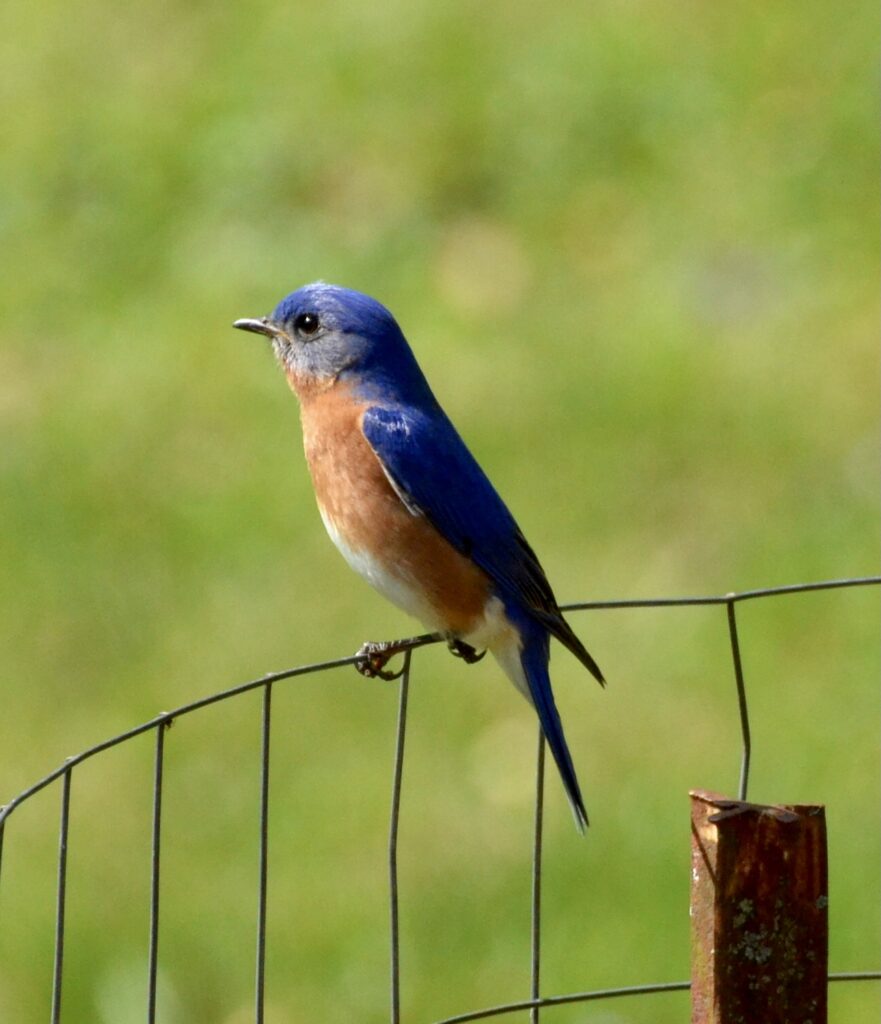
Honeywell has done a lot of birding on Goucher’s campus. She started with the trails, which were convenient and yielded some new lifers. But birding in the woods can be tricky, as it’s hard to see birds in the canopy, and many birds prefer ecological boundary zones, like the border where a forest meets a meadow or marshy areas between water and land. On the morning of our talk, Honeywell had gone to the college’s horse field, her favorite place on campus for birding. “I realized that it’s a really good place for aerial insectivores, like bluebirds and phoebes,” she says. “I saw some chipping sparrows there, too.” She also recently checked off two new lifers in the field, a pine warbler and her favorite bird, a brown creeper. “I think I like the creeper because it’s the only tree creeper in the U.S., so it’s unique,” Honeywell says.
She likes to go out as early as possible. She has a pair of binoculars and uses a Nikon Coolpix to take pictures. “A lot of birders use it,” she says. “It’s kind of basic, just for documentation. You can get some good pictures from it, but you have to be really close to the bird.”
Advice for birders
Put a feeder out. Their favorite food is black oil sunflower seed, and they also like suet.
– Meg Ahrendt ’77
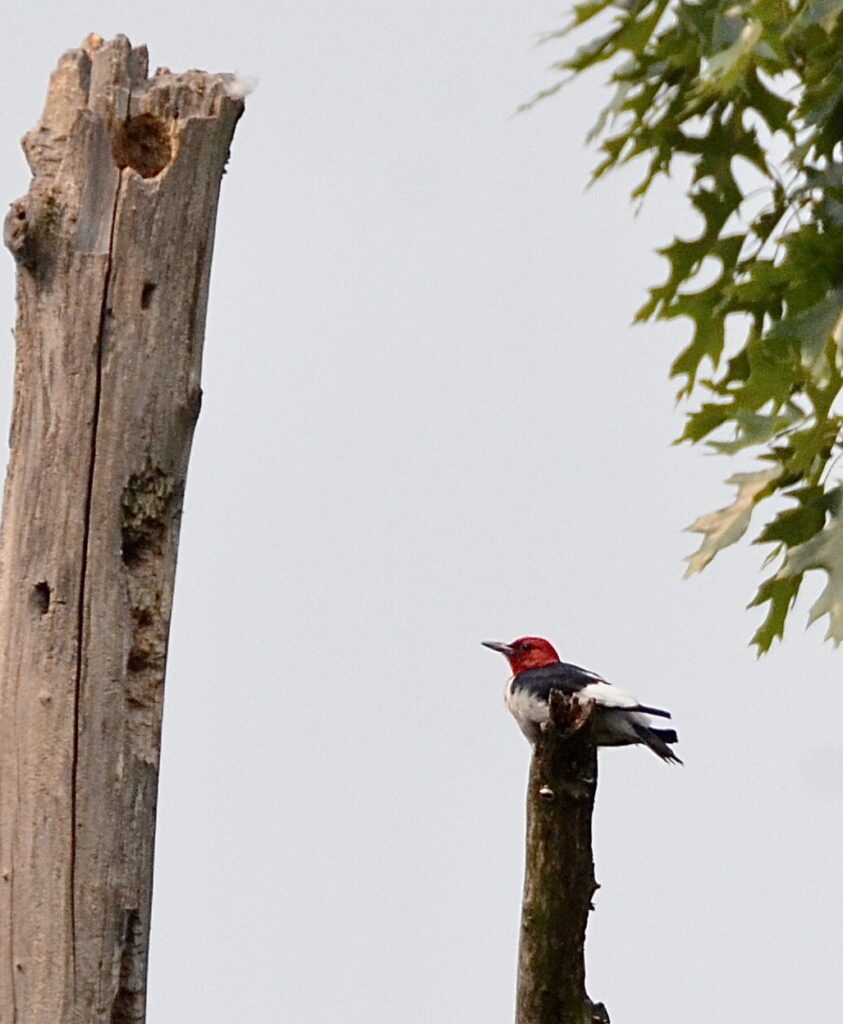
These days, Ahrendt, who is retired now but was a teacher for 30 years, does lots of birding in her backyard. She and her husband live on a two-and-a-half-acre property in Baltimore County with an alfalfa field on one side and the Prettyboy Reservoir watershed on the other. In the winter, they put out bird feeders and leave dead flowers up in the garden, which birds can forage seeds from. “We get your typical backyard birds,” she says, like Carolina wrens, cardinals, titmice, goldfinches, and chickadees. She sits with her coffee and watches them, just like her grandmothers did. They also see plenty of eastern bluebirds, bald eagles, and black vultures in the alfalfa field as well as great blue herons flying overhead. With binoculars, they’ve seen tree swallows, pileated woodpeckers, and red-headed woodpeckers all raising their young.
Ahrendt and her husband frequently carry binoculars when they go for walks near Prettyboy Reservoir. One day, they decided to try to find some owls. “There are certain trees we call the owl trees, these big white pines that are back in the reservoir property,” she says. “We’re looking, we’re looking, we see nothing.” They give up and go home, but then, while standing in their yard, they hear it: “Who cooks for you? Who cooks for you all?” It was the classic barred owl hoot. “They were telling us where they are,” she says. “That’s something to think about; they see us all the time. But just because we’re looking for them doesn’t mean they’re going to show themselves.”
Before retirement, McHugh worked in consulting and fiscal management in Baltimore City. Now living full time right on the water on the Eastern Shore, she sees the usual East Coast backyard birds as well as great blue herons, green herons, ospreys, and bald eagles. As a member of the Maryland Ornithological Society, she gets email notifications about rare birds entering the state. That was how, one winter years ago, she learned that there was a snowy owl less than a mile from her house. “The word got out,” she says, and McHugh, along with “probably all the birders on the Eastern Shore,” went to see it. “Joining a bird society, whether you are active or not, keeps you quite interested in what’s going on.”
Advice for birders
I’d start with a book and a good pair of binoculars. If you’ve never done it before, find a group that’s taking a trip. There are also courses from Cornell Lab you can take online.
– Sarane McHugh ’57
McHugh has taken birding trips to places like Alaska, the Georgia Sea Islands, and the Hebrides in Scotland. She once went to Grand Manan Island in New Brunswick, Canada, and traveled by small boat to nearby Machias Seal Island for the puffins. “That was the best experience of my birding life,” she says. “Because you’re watching from a blind that looks right out into these rocks where the puffins are coming in to feed little fish to their young ones, and they’re so cute. It’s quite a sight.”
She also regularly participates in the Mid-Winter Eagle Survey at Blackwater National Wildlife Refuge in Dorchester County, MD, which has been going on since 1980. That first year, 24 eagles were counted. This past year, thanks to concentrated recovery efforts, volunteers counted 329 eagles, the highest number yet.
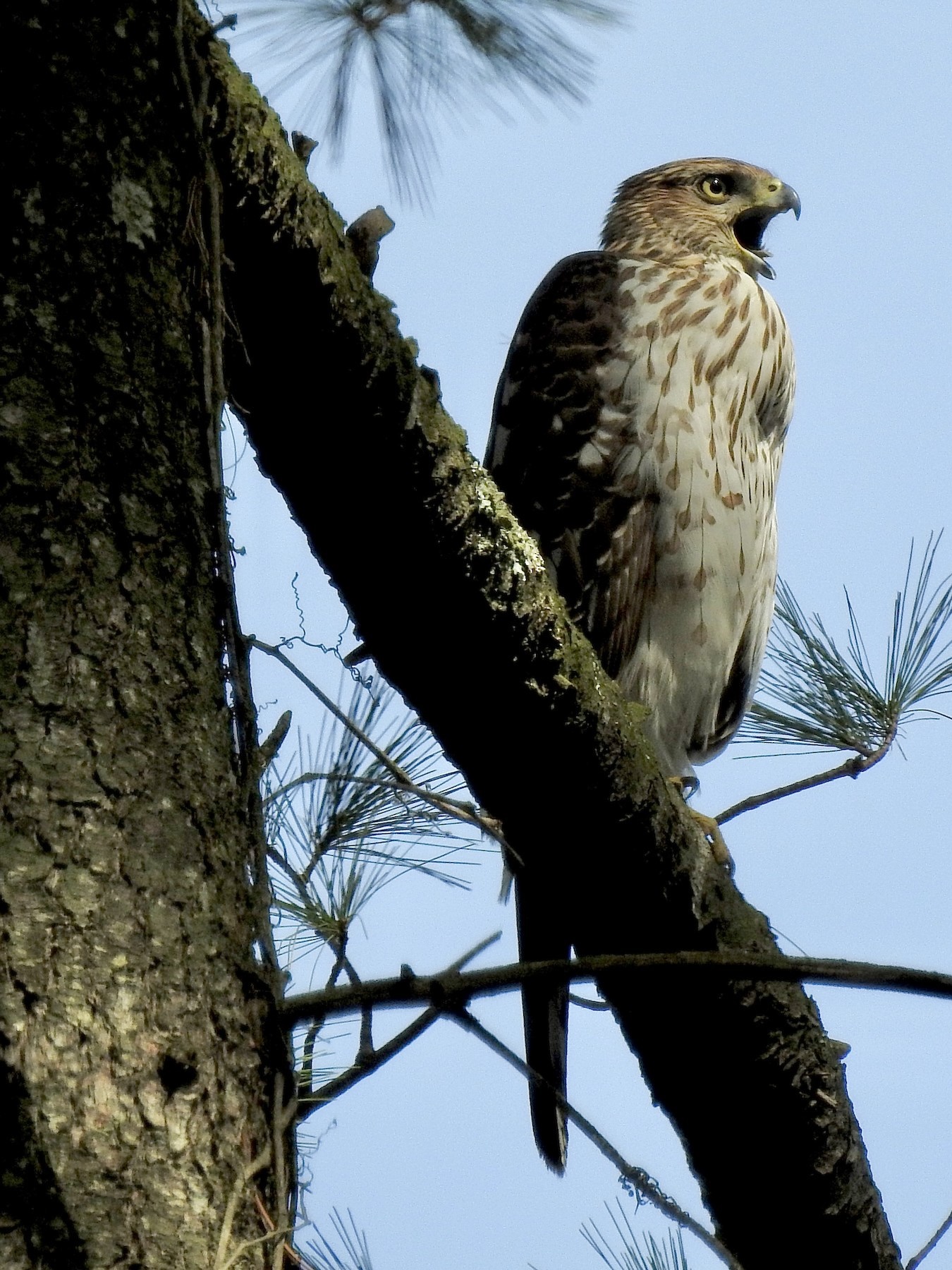
But threats to bird populations remain—from habitat loss, collisions with buildings, pesticides, and cats. Jackie Greenberg ’73 does a lot to help birds where she lives in South Florida. She volunteers with Pelican Harbor Seabird Station, a wildlife rehab facility for native birds and other native animals like opossums, squirrels, tortoises, and snakes. Greenberg sits on the board, where her experience as a certified public accountant is useful. She also does volunteer work like cleaning pens and preparing meals for the birds. She loves that it means she gets to spend time outdoors on the bay, “instead of having to pick a sport like tennis or something,” she says.
Pelican Harbor treats many shorebirds, like pelicans, skimmers, gulls, and cormorants, but also warblers and corvids like blue jays. They have some permanent residents, too, including a great horned owl, an eastern screech owl, and six pelicans. “One of the pelicans is blind in one eye, so he can’t fish without bifocal vision,” says Greenberg. Another was kept by a family in Vancouver for a month, so he is used to being fed by humans. “Bringing him back into the wild would be very difficult.”
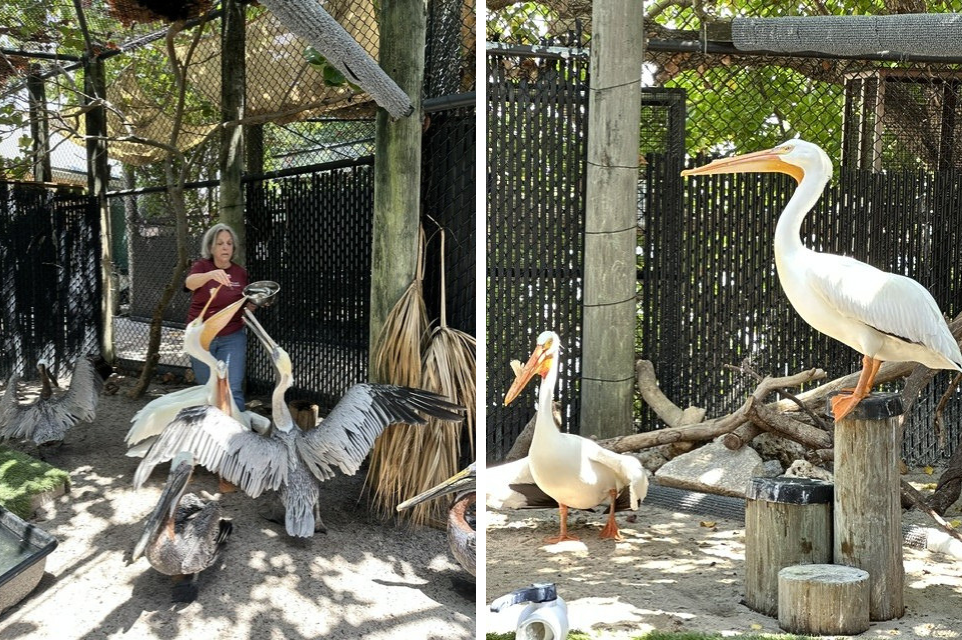
There are plenty of success stories, too. “We have very good veterinary care,” she says. Baby birds that fall out of nests can be looked after and returned to the wild. Broken wings are fixed and head traumas from building strikes heal. A big news story recently involved a great white heron injured in Key Biscayne by a fisherman, who was later arrested. “That bird was brought to us,” says Greenberg. “It took about six months for it to be taken care of because it had a seriously broken wing, and it was just released within the last month.”
Greenberg points out that it’s important for people to be educated on problems like this—they need to know what they’re not allowed to do to birds, but also what they are allowed to do. People sometimes call in asking about baby birds found on the ground. “We encourage them to try and find the nest and put them back in the nest,” she says. “That whole thing that if you touch them, the mother will never feed the babies again, is just an old wives’ tale.”
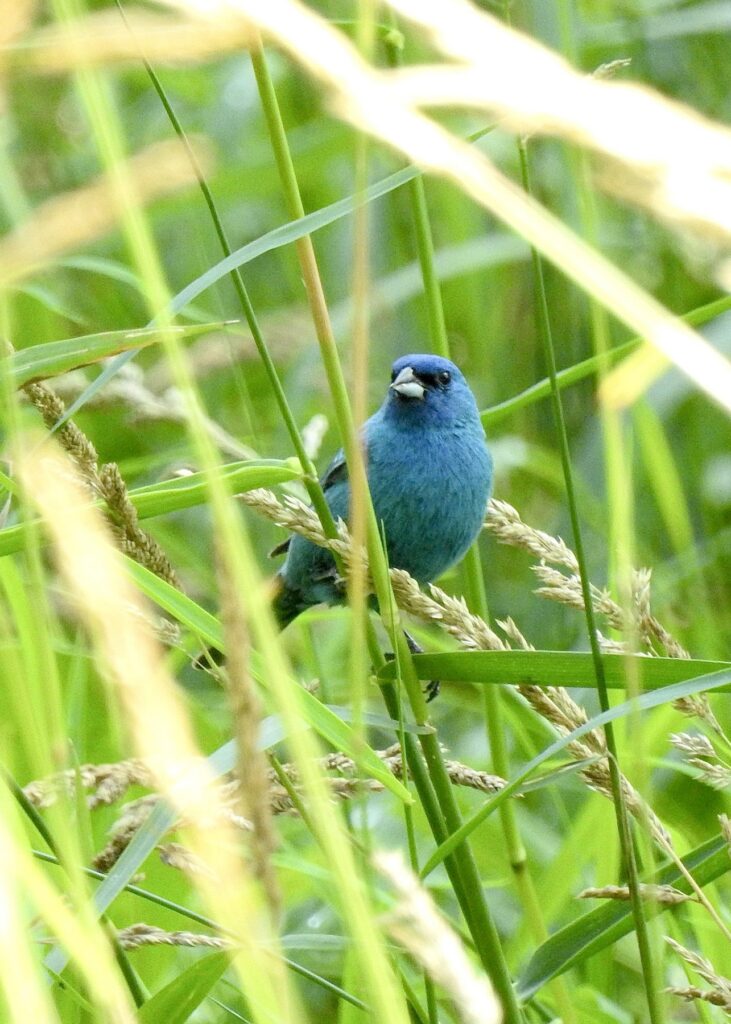
As a young birder, Honeywell wants to do and see so much one day. She says she’s not a twitcher—that’s the lingo for someone who travels a long distance to see a rare bird—but one day she’d love to go to Costa Rica, a mecca for bird diversity, or even southern Texas or Arizona. “I like little brown birds,” she says. “There are a lot of different little brown birds around Arizona, like rock wrens and canyon wrens and clay-colored sparrows.” For Honeywell, the one that got away, what some people might call a “nemesis bird,” was a Wilson’s warbler. Once, she was on the NCR trail and the Merlin app picked up the song of a Wilson’s. “There was one in a bush, and I saw a teeny tiny little flash. But I did not get a clear enough look to log it.” She was curious and looked up a picture. “It was a little yellow bird with a toupee. I was like, I need to see this because they look so funny. They’re not even that rare. They’re just one that I just can’t find.” A while after we spoke, once spring migration was fully underway, she finally saw one.
Advice for birders
Start with binoculars. Don’t do what I did. I spent as much on a telephoto lens as I would have on binoculars, and it was so much harder to use. Even a cheap pair of binoculars is going to help you so much. Merlin and eBird—start on them early. That’s really all you need.
– Carmen Honeywell ’26
There are challenges that come with birding. Ticks, mosquitoes, too much sun behind the bird you’re trying to see, or not enough sun to make out details. There’s the disappointment when you’re sure you’re seeing a new bird and it turns out to be one you’ve seen a hundred times before. But there are so many joys in birding, sometimes just from seeing a familiar bird do something unexpected. On my campus walk, I saw a large bird fly by in the distance. I searched and searched for it in vain. Then I heard a noise, turned around, and there was something else entirely on the tree right behind me—a red-breasted nuthatch, which, according to the Merlin app, was an “unlikely” sighting for the Goucher campus in late March.
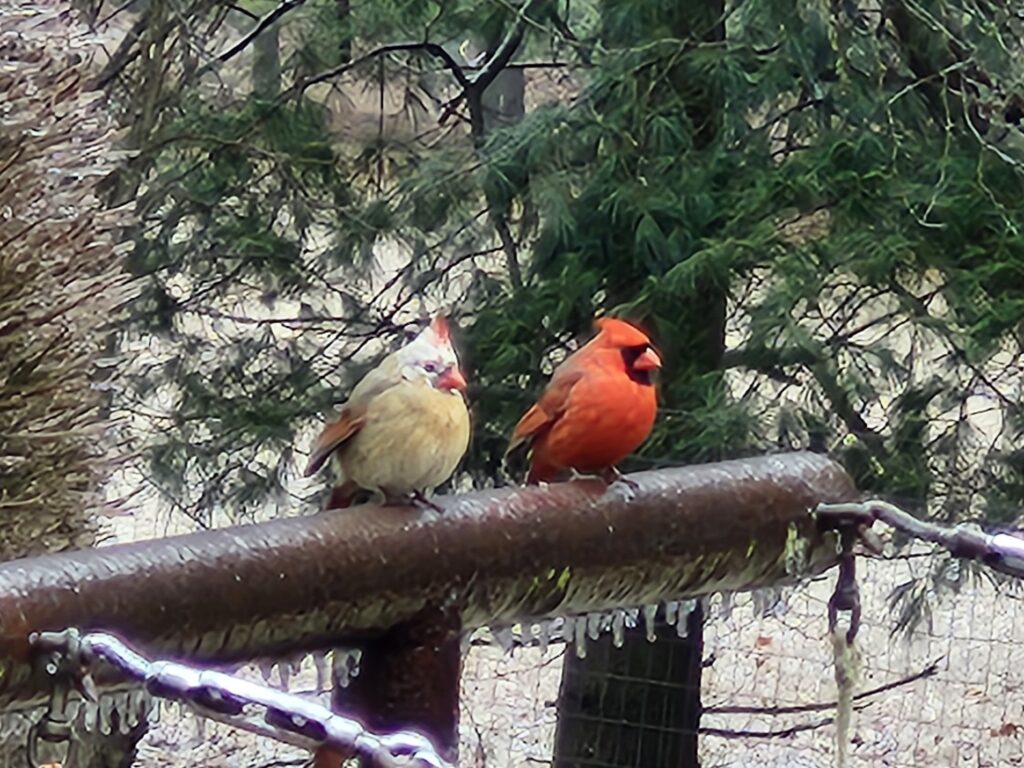
Honeywell saw two red-tailed hawks mating on campus. McHugh was once in her vegetable garden on the Eastern Shore when a fish dropped from the sky right next to her. She looked up and saw an osprey. Two winters ago, Ahrendt saw a leucistic female northern cardinal at her bird feeder. Leucism is a genetic condition that prevents melanin from depositing in bird feathers, which makes the bird white in spots or even entirely so. Another time, Ahrendt was sitting outside with family visiting from Germany when two male scarlet tanagers began a singing contest. “They were facing off against each other in a white pine, and we had a very clear view. It went on for about half an hour,” she says. “I don’t know what the result was, but it was a magical moment.”