
Learning With Lego
The mere title of the class—Quantum Chemistry & Spectroscopy—is enough to intimidate the average person. But for senior chemistry majors, it is an opportunity to dive into the subject and build something with their own hands.
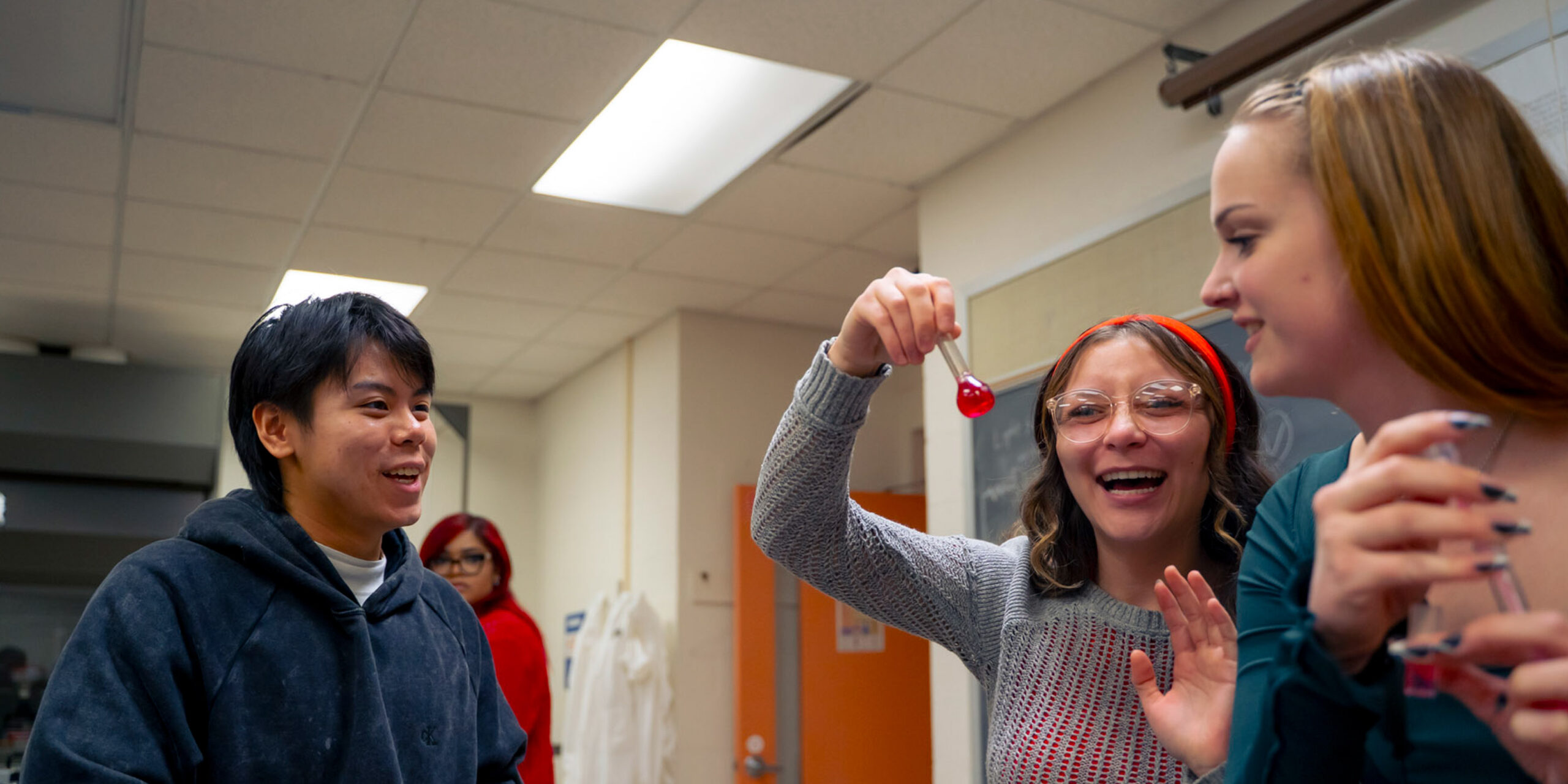
Using Lego bricks, LED lights, circuits, and a battery ordered from Amazon, students in CHE 465–Quantum Chemistry & Spectroscopy were able to build an accurate colorimeter, a machine that can measure chemical concentrations in liquid samples, for less than $20, rather than the typical $1,000 cost for a professional model.
Associate Professor of Chemistry Wei Wei says the project is an excellent way for students to understand how the equipment works on a fundamental level. “I am a strong believer in hands-on learning, and this is especially important when students are taking physical and instrument-related chemistry courses,” says Wei.
Since students traditionally learn how the instrument works theoretically, Wei says that letting them build one is a more comprehensive project that blends interdisciplinary skills, including literature analysis, planning, chemistry, physics, basic electrical engineering, and data analysis.
Alyssa Howell ’25 agrees.
“It helped us understand what is actually going on,” says Howell. “We can hear him tell us in the lab, but now we are actually seeing it.” She says these hands-on projects directly prepare her for her career and that she has built connections between these types of projects and learning across her classes.
Howell is a chemistry major and began working on a Summer Science Research Project in 2024 with Associate Professor of Chemistry Kevin Schultz. That work evolved into an independent research project and her senior capstone project. She plans to continue with graduate school after working in a lab at the National Institutes of Health (NIH).
Like Howell, Zoe Wright-Riley ’26 was interested in this project because it allowed students to work through how a colorimeter works. “Putting this together gave us deeper insight,” she says. Wright-Riley works in the chemistry stock room to help set up labs for general chemistry and organic chemistry classes. “I really love being in the lab and being hands-on,” she says.
Wright-Riley, who is also a member of the equestrian team, has conducted research with Schultz over the past two summers as part of the Summer Science Research Project, and this year is now working with Wei on a second research project focused on computational analysis of quantum dynamics. Wei created software to conduct the analysis needed for the project.
“Goucher is really good at providing every opportunity to be hands-on,” says Wright-Riley, who is currently applying to graduate school.
She hopes to provide opportunities like these to her future students, as she plans to teach chemistry at a small liberal arts school like Goucher, where she can conduct research and engage in student-centered learning projects.
Word Is Bond
“You learn so much from their stories,” says Ronald Wolfe ’26 about his experience contributing to the Celebrating Black Alumnae/i and Their Stories collection in Goucher’s library as part of the HIS 370–Word Is Bond: Oral History as Preserving Culture class this fall.
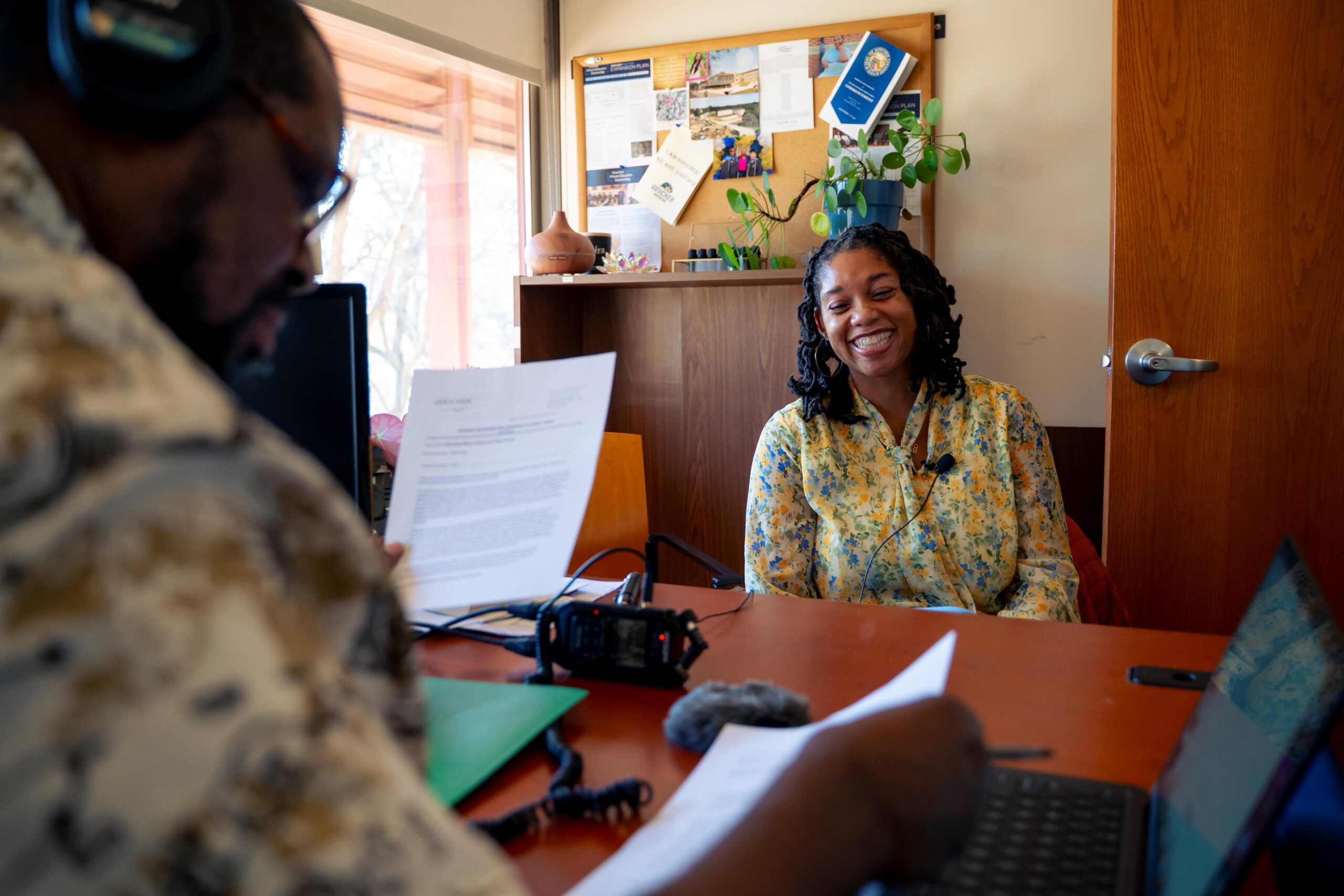
This is the second time that Associate Professor Kami Fletcher, who teaches African diasporic histories and coordinates the Africana Studies Program, has taught this course at Goucher. Working with Kristen Welzenbach and Deborah Harner in the Goucher library’s Special Collections and Archives, Fletcher and her students are building a repository of oral history projects about Goucher student experiences, offering a real-world application of the class skills.
For Wolfe, a key takeaway from this hands-on project was how to develop open-ended questions and how to make the speaker feel comfortable sharing their experience.
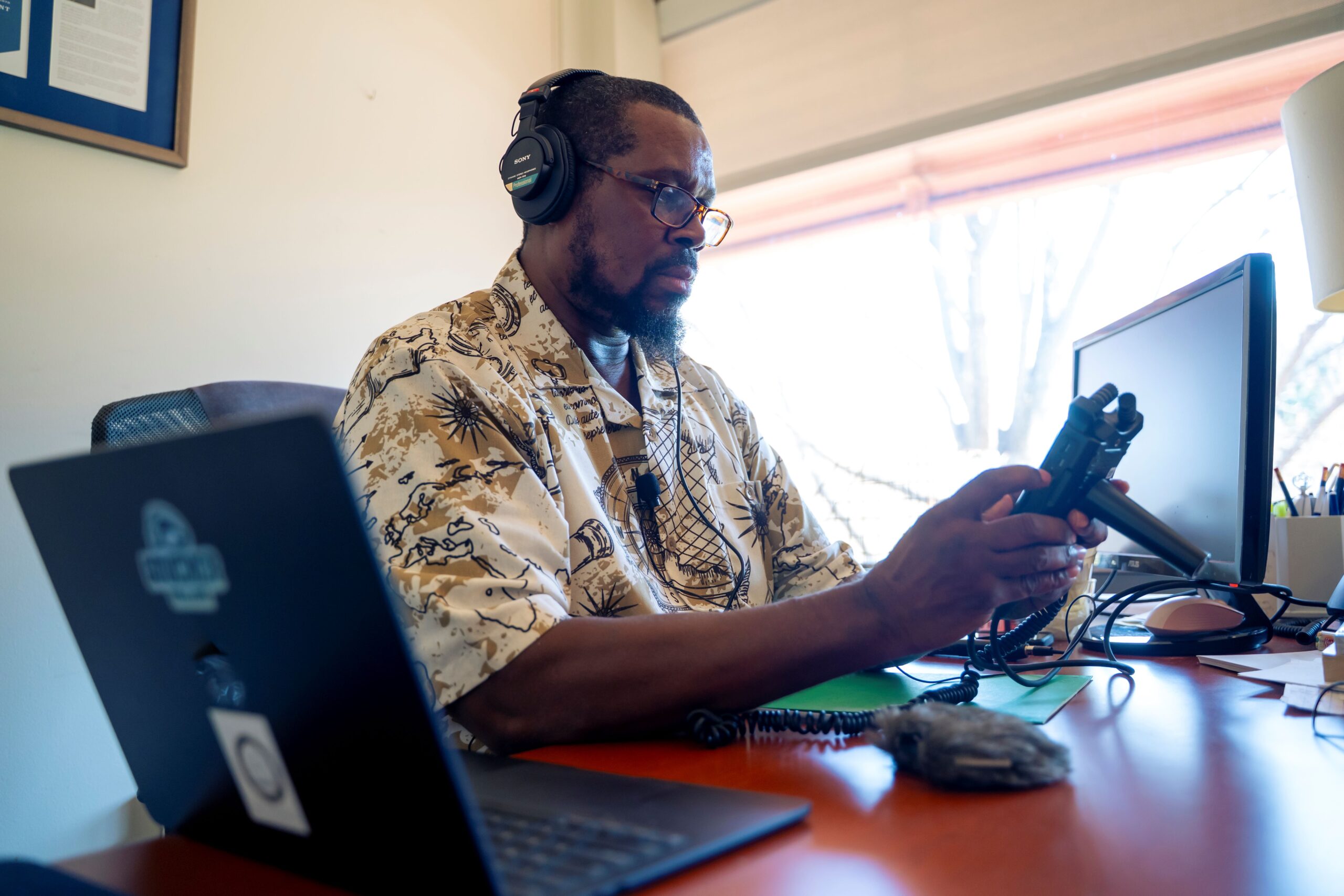
“One of the big things we do in the class is explore why an oral history is different than investigative journalism,” Fletcher explains. She says the students are “creating an oral history project using someone’s lived experience.”
Fletcher says they learn professionalism through the hands-on learning experience and take pride in the work they do. “You are responsible for that person’s story being out there,” she tells her students.
Like most of the students in the class, this was Wolfe’s first oral history project. “It was overwhelming at first,” he says. “Then it becomes second nature—you learn by doing.”
He was able to move past his nerves in part due to the preparation techniques Fletcher shared in class throughout the semester. The class learned how to conduct these oral history projects and how to pivot when mistakes occurred or when recording equipment broke. “I was ready and had a backup,” he says. “She had us on point.”
Wolfe said he was drawn to the project because he wanted to hear his subject’s story about their experience as a Black alum or first-generation student, and what it felt like to enter a new environment.
“The overall experience was so beautiful and transformative,” Wolfe says. “The project allowed me to open up and talk to people, and I will be able to use that in a professional setting after graduation.”
First-Year Seminar: Our Environment, Chemicals, and Cancer
As they begin their studies, Goucher students are offered an engaging range of first-year seminar (FYS) course options, like Thinking as Consumption, The Art of Negotiation, and Understanding International Peace and Conflict. First-year seminars serve as a student’s advising group, and each FYS connects students with shared interests in an engaged intellectual community.
For students interested in exploring how chemicals may improve or harm our lives and how different parts of the world approach policy-making, one of the unique FYS classes offered in the fall semester was Our Environment, Chemicals, and Cancer.
“Since I am very used to lab work, I introduced a couple of relevant hands-on experiences in my first-year seminar,” said Jenny Lenkowski, the Lilian Welsh endowed professor and associate professor of biological sciences, who teaches the FYS.
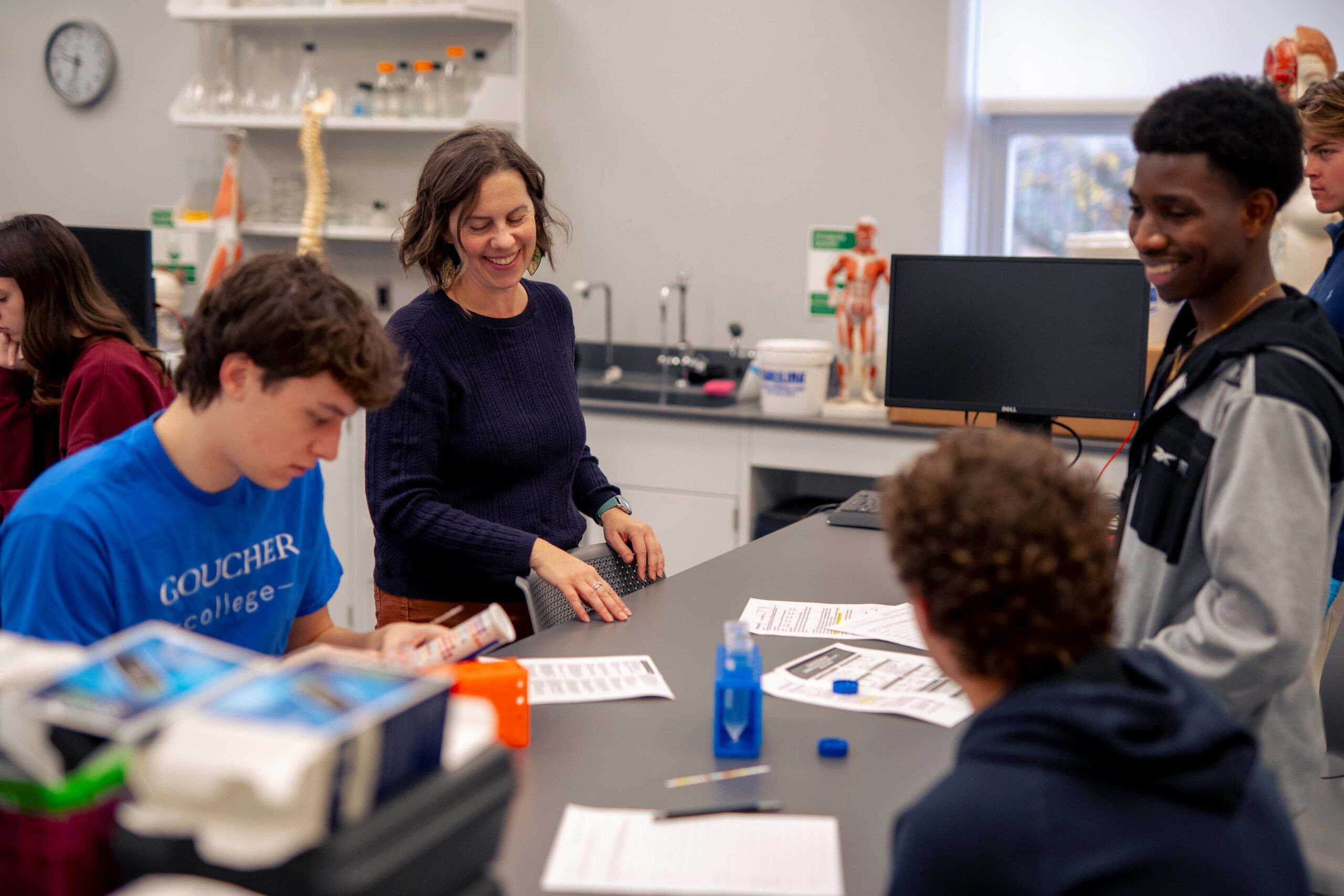
Building on ideas explored in class, students used pesticide test kits for food and water to test samples collected in the Baltimore area. Students did not need to have any lab experience to participate in the class.
“We compared results from pesticides from the store to food samples and water from natural sources and public water supplies to discuss the reliability of these tests, how to perform them to be able to make reasonable conclusions, and any surprises from comparing water sources,” said Lenkowski. “Several [students] became curious to further test a few water sources after class.”
One of the students who took advantage of the opportunity to do immersive classwork was Martin Mbonye ’29, who is studying biochemistry and molecular biology.
“It was valuable to get clear answers to my questions and gain a deeper understanding of the water quality,” said Mbonye.
These first-year seminar courses exemplify the Goucher experience by supporting students’ exploration of academic inquiry and encouraging them to seek challenges, improve academic skills, develop an academic plan, engage in the community, and venture out, all while participating in small, discussion-based classes.
This was all true for Mbonye. “I really enjoyed the hands-on experience and appreciated the opportunity to see the process firsthand.”